

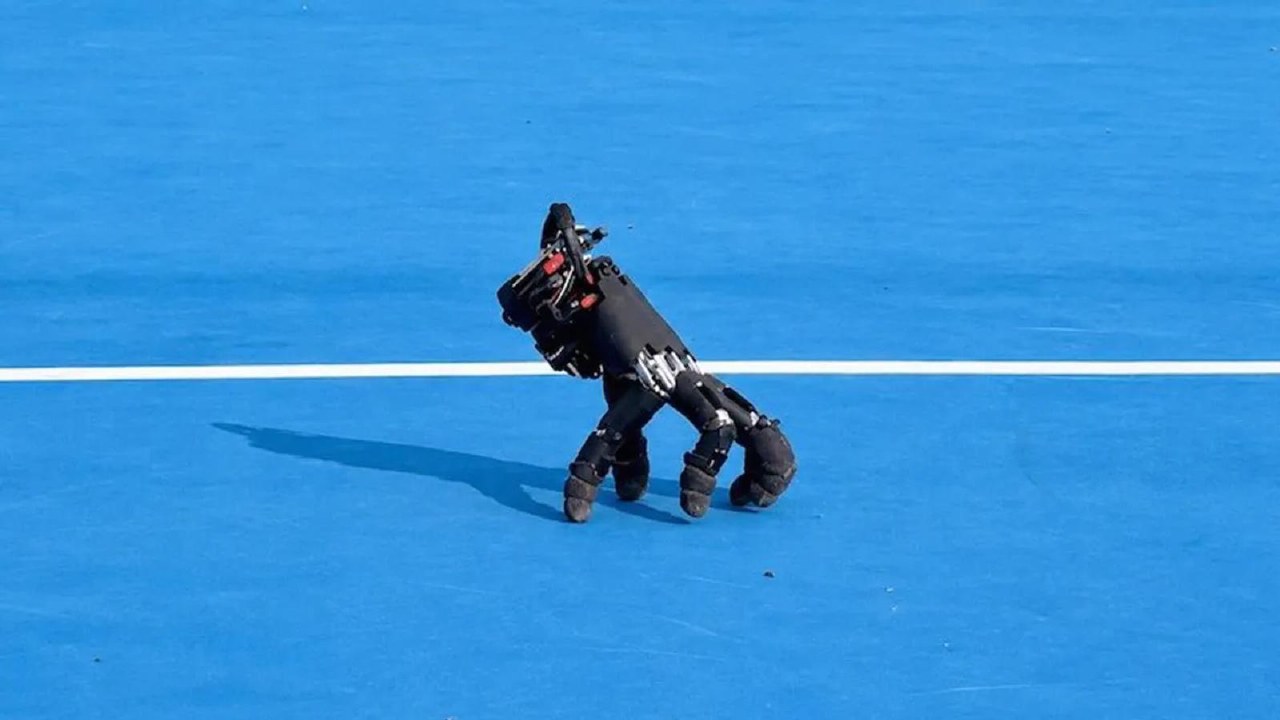
Researchers at the Soft Robotics lab of ETH Zurich have developed a robotic hand capable of independent movement on its fingertips. The system maintains balance and adapts to various surfaces while navigating and interacting with objects. The team utilized an existing humanoid robotic hand without modifying its finger length or internal position controller.
To achieve autonomy, the researchers integrated a battery, a computing module, and a sensor suite into the hand. The control algorithm was trained in a virtual environment using reinforcement learning, where the system received rewards for successful movement while maintaining natural finger positioning. The trained model was subsequently deployed to the physical hardware.
During testing, the robotic hand successfully traversed over ten different indoor and outdoor surfaces, including tile, grass, and stone. The system adjusted finger movements based on the varying friction coefficients of these surfaces. Additionally, the hand demonstrated precision by pressing computer keys to complete a level of the game Sokoban without losing balance.
The developers suggest that such mobility could enhance robotic systems operating in confined spaces. A large robot could position its hand on a surface near a narrow opening, allowing the hand to move independently to reach controls or objects. Future research will focus on combining this autonomous navigation with complex manipulation tasks.



