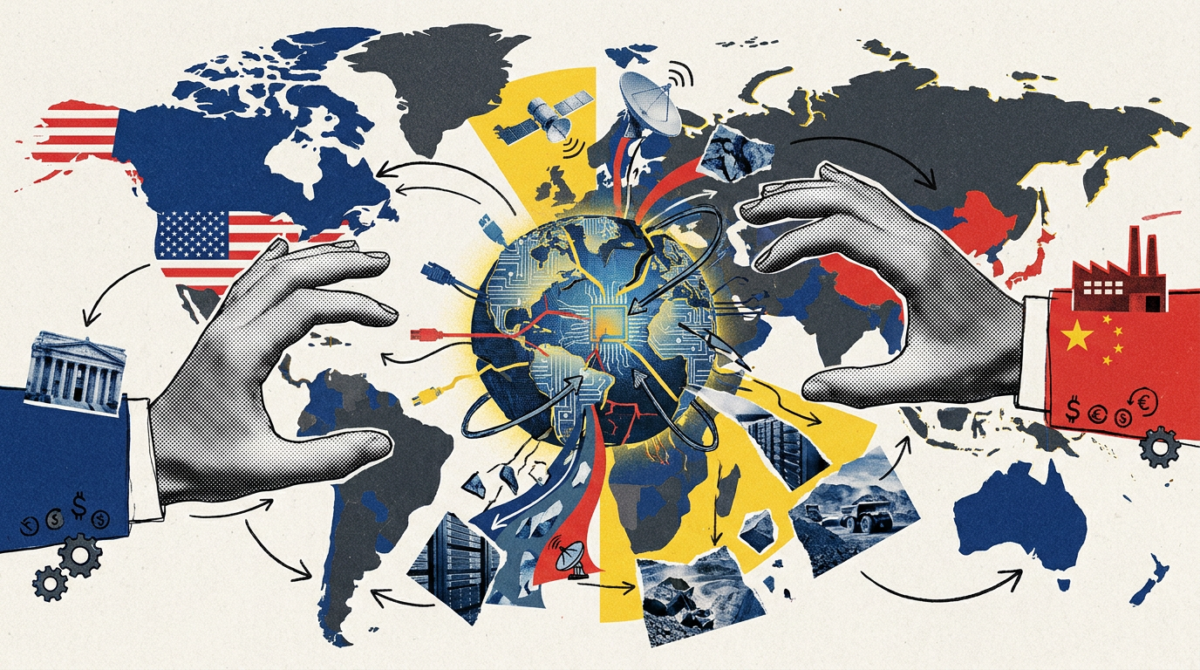
Former Google CEO Eric Schmidt, historian Niall Ferguson, and researcher Lisa Klaassen argue that the AI race is creating a new form of geopolitical dependency. They compare leading AI labs like OpenAI and Anthropic to colonial-era trading companies that operate under government oversight while wielding significant influence over global resources.
The authors highlight a June incident where the US Commerce Department restricted Anthropic from providing its models to foreign nationals. This led to a global shutdown of Fable 5 and Mythos 5, with Mythos 5 remaining restricted to US organizations even after export controls on Fable 5 were lifted two weeks later.
Investment strategies differ significantly between the two powers. US tech giants, including Google, Amazon, Microsoft, and Meta, plan to invest roughly $725 billion in AI this year, with total US tech investment projected to exceed $600 billion in 2026. China plans to invest $295 billion over five years using government bonds.
The authors identify an imperial trilemma where the US must balance defense spending, tech leadership, and welfare. In 2024, US interest payments reached $881 billion, surpassing the defense budget of $874 billion. By 2036, interest costs are projected to double the defense spending.
Supply chain vulnerabilities remain a primary concern, particularly regarding TSMC's proximity to China. While new manufacturing facilities are under construction in Phoenix, Kumamoto, and Dresden, the authors note that these sites are not yet operating at the necessary scale to mitigate the risks of a potential crisis.