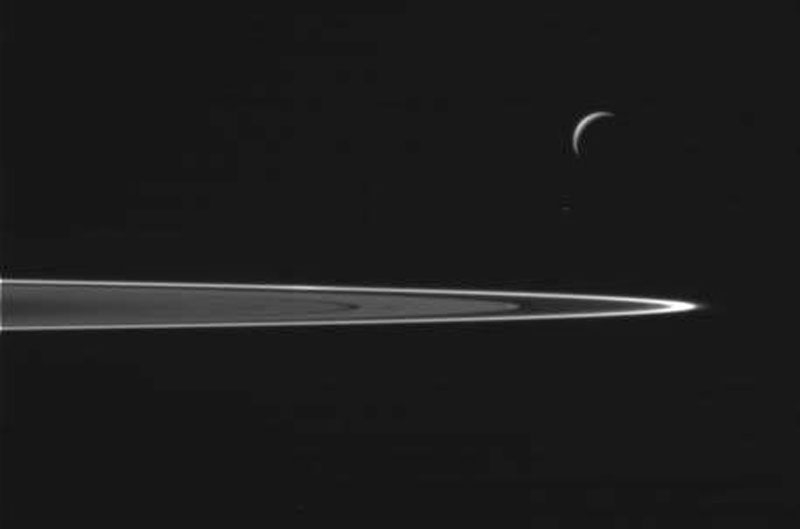
International researchers discovered that ice particles ejected from Enceladus' subsurface ocean naturally concentrate chemical substances. As these droplets freeze gradually, they separate compounds like sodium chloride and sodium carbonate, creating localized concentrations within the ice grains.
Within the moon's surface cracks, vapor streams accelerate these particles to speeds of approximately 1000 km/h. Collisions with channel walls break them into micrometer-sized fragments, which may contain concentrated organic compounds or biological markers, making them easier for space probes to detect.
In a separate experiment, scientists simulated Enceladus' ocean conditions, featuring high alkalinity with a pH of 10–11 and hydrogen production. The Earth-based archaea Methanothermococcus okinawensis successfully adapted to this environment, continuing to produce methane despite limited carbon dioxide.
These findings are influencing the design of future space missions, including concepts from the European Space Agency. Researchers aim to develop specialized analytical instruments capable of examining individual ice particles within the plumes during flybys.