

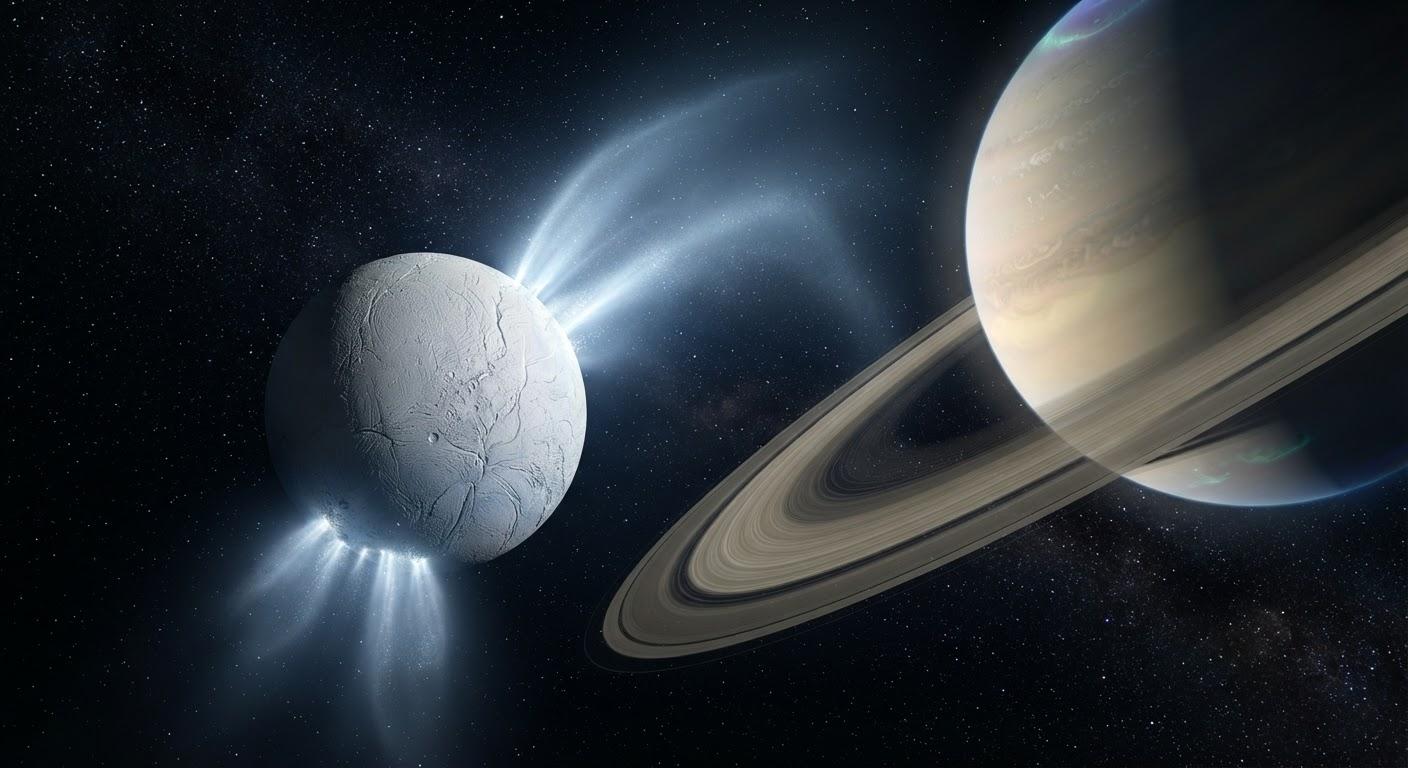
Enceladus, a moon of Saturn, features a subsurface ocean that ejects water and ice particles into space through cracks near its south pole. NASA's Cassini spacecraft previously detected salts and organic compounds within these plumes, suggesting potential hydrothermal activity on the ocean floor.
Recent research indicates that ice particles from these plumes act as natural test tubes. As gas bubbles rise and burst, they create droplets that freeze, causing substances to separate. High-speed movement through cracks further fragments these particles, potentially concentrating biological material within specific shards.
Future space missions could leverage this process by analyzing individual ice particles rather than the entire plume volume. This method increases the likelihood of detecting concentrated biological signatures if microorganisms are present in the ocean.
A separate study tested the resilience of the Methanothermococcus okinawensis archaea in conditions mimicking Enceladus. The organism survived and produced methane in an environment characterized by high alkalinity, minimal carbon dioxide, and an absence of oxygen, utilizing hydrogen as an energy source.



