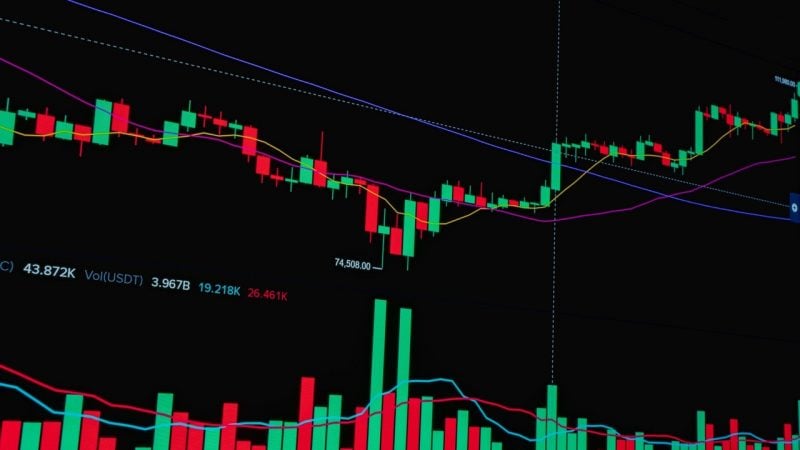
Analysts at DWF Labs examined 694 trading days from January 11, 2024, to October 16, 2026, comparing net flows in US spot Bitcoin ETFs with price movements on Coinbase. The study found that investor behavior is primarily trend-following, with capital inflows typically occurring after price increases and outflows following declines.
The correlation between ETF flows and Bitcoin price changes over the following week was found to be 0.03, suggesting that these flows are not a reliable leading indicator for future price action. During eight major market corrections of 15% or more, investors withdrew capital in seven instances, contradicting the theory that ETFs act as a stabilizing force during downturns.
Data indicates that when Bitcoin drops by approximately 7% from its 20-day high, average daily inflows of $74 million shift to outflows of about $72 million. Conversely, inflows tend to rise following a 5% increase from the 20-day low. Analysts also noted that roughly 20% of ETF capital may be linked to basis trading strategies involving CME futures.
The BlackRock IBIT fund has attracted $65.6 billion in net capital, exceeding the total net inflow of approximately $57 billion across all US spot Bitcoin ETFs due to outflows from other products like Grayscale's GBTC. Despite its size, IBIT flows showed a correlation of 0.04 with Bitcoin returns over a five-day horizon, mirroring the broader market trend.