

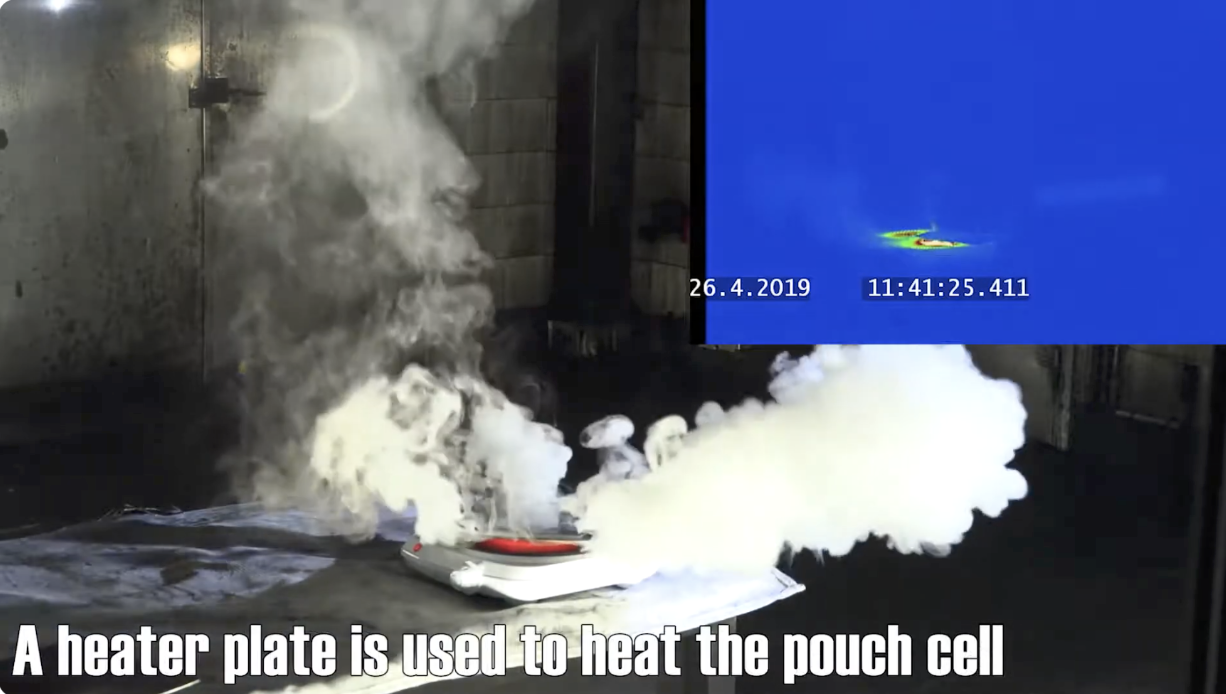
Donut Lab’s DL2 battery is not an NMC-type cell, according to recent comparative testing. While NMC batteries contain liquid electrolytes that decompose at 100 degrees Celsius, causing the pouch to inflate due to internal pressure, the DL2 battery maintained its shape after four hours of exposure to the same temperature.
During the experiment, an NMC battery tested at 100 degrees Celsius expanded significantly and forced the termination of the test after displacing a heavy cinderblock. In contrast, the DL2 battery showed no signs of ballooning, smoke, or exothermic heat generation. Following the high-temperature exposure, the DL2 cell underwent dozens of cycles at room temperature without safety incidents.
Donut Lab also conducted nail penetration tests on its cells, which resulted in no fire, explosion, or smoke, further distinguishing them from NMC batteries that typically burn under such conditions. Additionally, testing confirmed that other Donut Lab cells are bipolar and solid-state.
The analysis refutes claims made by Ziroth, which suggested that DL1, DL2, and DL3 batteries were NMC-based. Critics had previously used voltage curve patterns as evidence, but these theories are now considered incorrect as the curves do not match NMC profiles exactly and can be influenced by doping.



