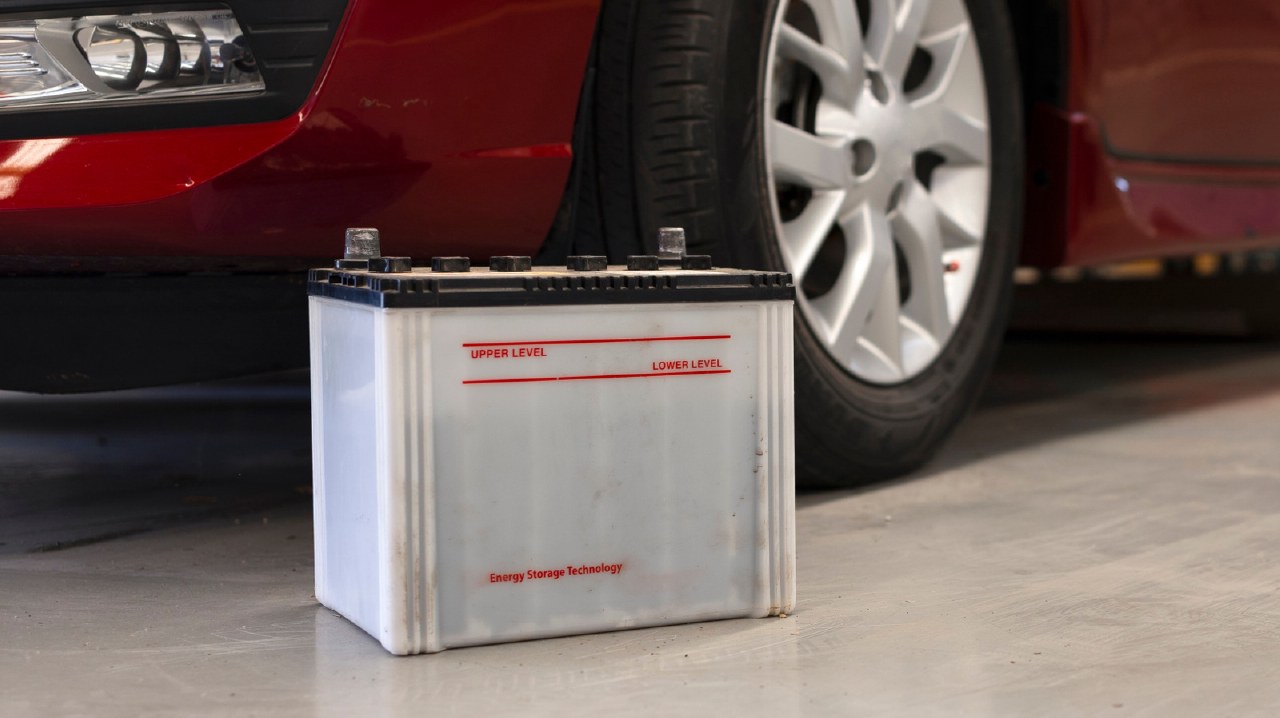
The belief that storing a car battery on a concrete floor causes damage is a myth. Modern lead-acid batteries are encased in durable, injection-molded plastic that prevents the discharge issues associated with historical battery designs.
Early 6-volt batteries from the 1920s used hard rubber or wooden cases that were prone to cracking and leaking. Placing these older units on the ground could lead to discharge, which contributed to the persistence of the current misconception.
While the floor does not harm the battery, the reverse is not true. Traditional flooded wet cell batteries contain sulfuric acid, which reacts with the alkaline calcium compounds in concrete. This chemical reaction can cause pitting, staining, and surface damage to the floor.
Experts suggest that if an acid spill occurs, it should be neutralized with a paste made of baking soda and water. This method stops the reaction and cleans the surface more effectively than using water alone, which may spread the acid.