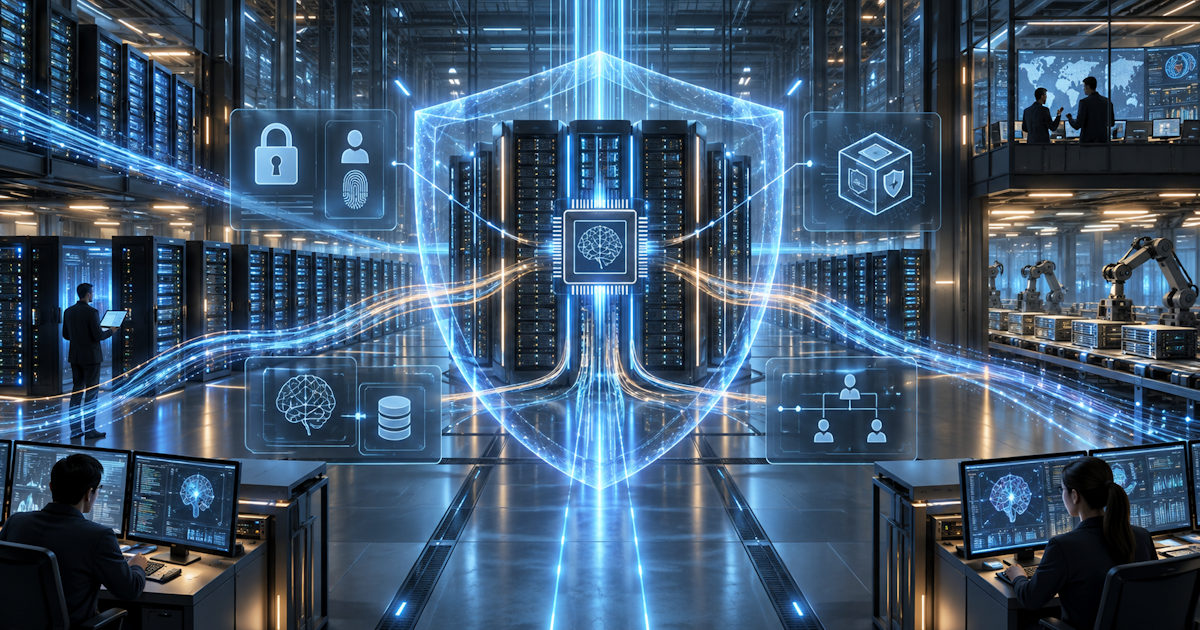
Enterprises are increasingly adopting AI, but traditional security models struggle to address the risks posed by autonomous agents and evolving data environments. According to the Darktrace 2026 State of AI Cybersecurity report, 92% of 1,540 surveyed cybersecurity leaders are concerned about AI agent security, while 46% feel unprepared to defend against AI-powered threats.
Dell Technologies and Intel are addressing these challenges by integrating security directly into infrastructure. Dell utilizes cryptographic image signing and SHA-384 hash verification in its Enterprise Hub to ensure model integrity. The company also focuses on rack-scale infrastructure that provides consistent telemetry across compute, storage, and networking components.
Intel emphasizes the CPU as the hardware root of trust, offering platform protection, confidential computing via SGX and TDX, and encryption acceleration. The company is collaborating with Nvidia to extend confidential AI protection to GPU-accelerated workloads. These measures aim to secure the hardware foundation required for sensitive AI processing.
To mitigate future risks, both companies are preparing for quantum computing threats. Intel expects all cryptographic operations within its platforms to use quantum-safe technology by 2029, with full post-quantum cryptography compliance across all new platforms targeted for 2030. Dell is also incorporating quantum-resistant protections into its portfolio.