

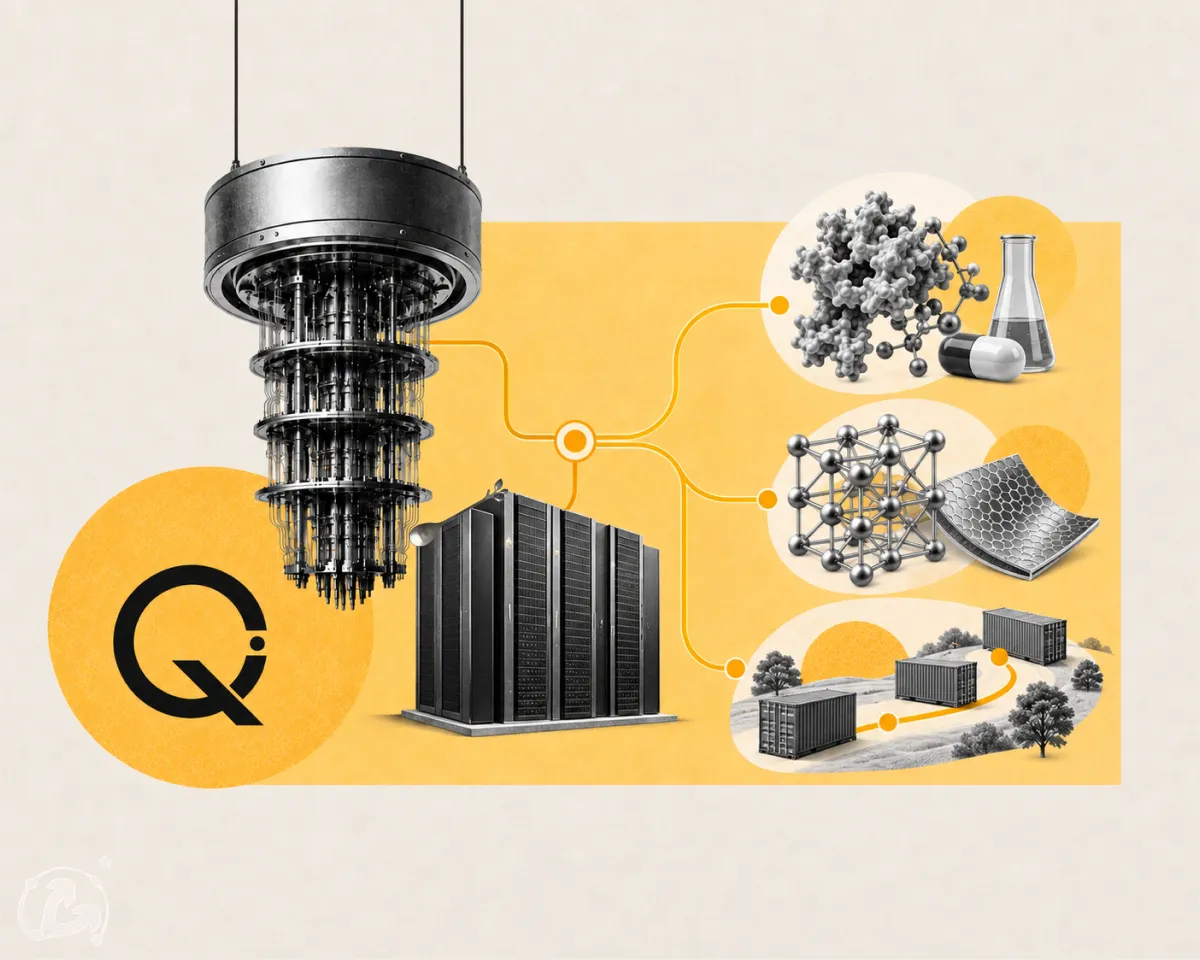
In the field of quantum chemistry, researchers from the Cleveland Clinic, RIKEN, and IBM reported in May 2026 that they simulated the electronic structure of two protein-ligand complexes, T4-lysozyme and trypsin, in an aqueous environment. These molecules contained 11,608 and 12,635 atoms, respectively. The process involved two 156-qubit IBM Heron r2 processors in the US and Japan, working alongside Fugaku and Miyabi-G supercomputers, executing 9,200 quantum circuits over 100 hours.
In March 2026, the Cleveland Clinic and IBM team modeled a 303-atom mini-protein, Trp-cage. Compared to previous efforts, the scale increased approximately 40 times, and accuracy at a key stage improved by 210 times. Additionally, QC Ware and IonQ demonstrated a hybrid calculation of the cytochrome P450nor enzyme's active center on September 1. The calculation used 8 qubits on the IonQ Forte system via Amazon Braket, with an interaction energy deviation of 0.5 kcal/mol from the classical reference, staying within the chemical accuracy threshold of 1 kcal/mol.
Other applications include water molecule potential energy surface construction and amantadine hybrid modeling using a 24-qubit IQM Sirius processor by the Qclairvoyance team in April. In logistics, Telefónica and Würth reported a pilot project in July involving the packaging of over 6,000 orders. The hybrid approach, combining quantum, classical, and AI methods, increased packaging efficiency by 14%, reduced the number of boxes by about 3%, transport volume by up to 7%, and cardboard consumption by more than 6%.
Currently, most quantum projects remain hybrid, where classical computers perform the majority of the work and quantum processors act as coprocessors for specific stages. While research continues into catalysts, battery materials, portfolio optimization, and risk assessment, commercial products are not yet available. The industry's financial future depends on whether quantum machines can reduce the costs of discovering new materials and molecules enough for corporations to move these expenses from R&D budgets to operational budgets.

