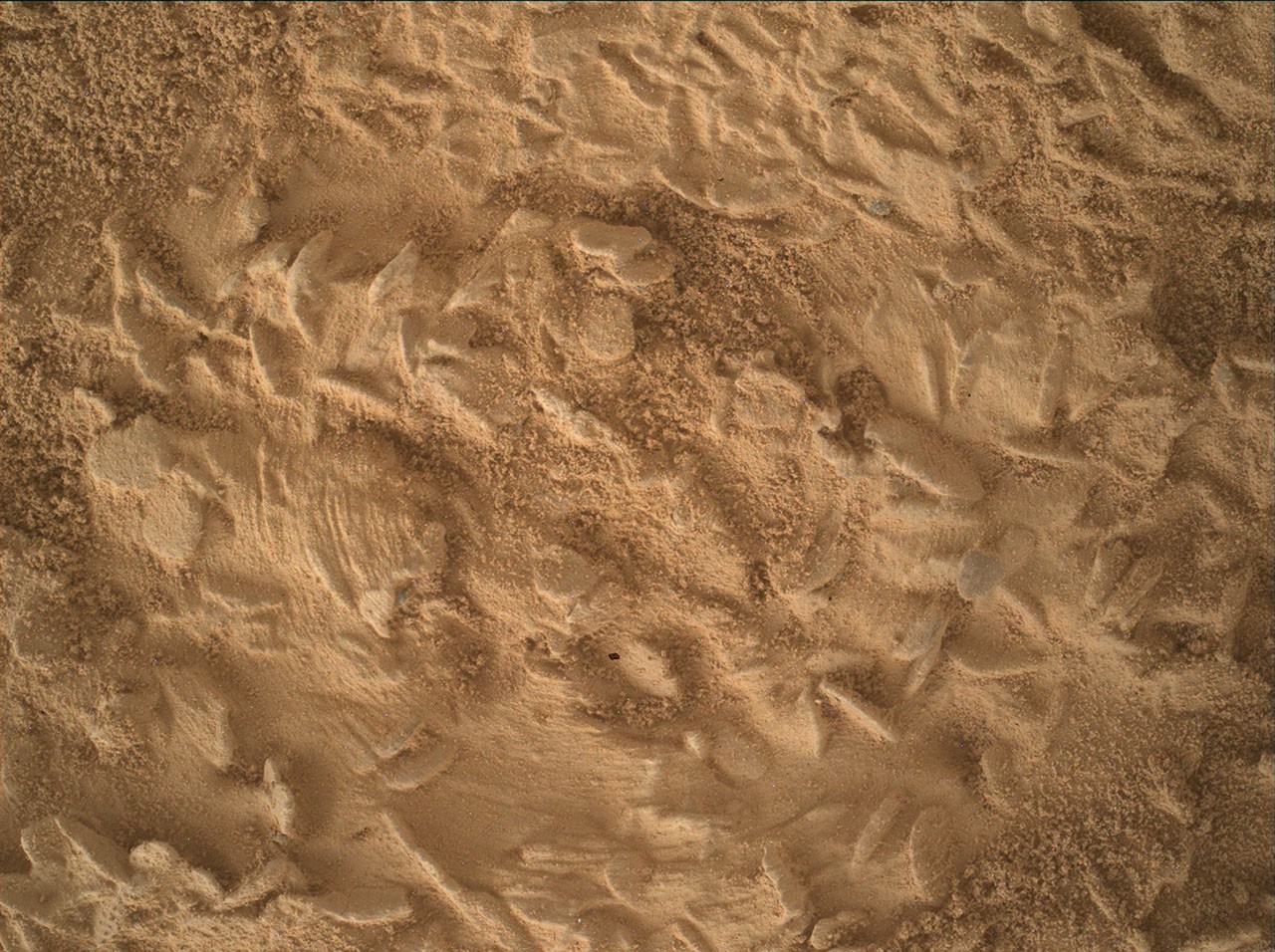
NASA's Curiosity rover is preparing for a new drilling campaign at a site on Mars informally named Nazca. The location was selected after the team identified numerous disc-shaped potential crystal forms on the rock surface, similar to those found at the nearby Chiu Chiu block.
To analyze the site, the rover will use its Mars Hand Lens Imager to create a three-dimensional Quantitative Relief Model. This process involves capturing five overlapping images at different geometries and doubling the focus mechanism steps to achieve higher resolution.
The ChemCam instrument will perform a depth profile experiment on a nearby target called Toucan. By concentrating 150 laser shots on a single spot, the team aims to penetrate five times deeper than standard observations to compare internal and surface composition.
Before drilling at Nazca, the rover will apply its LIBS, DRT, and APXS instruments to characterize the surface. Additionally, the mission continues monitoring the Martian environment, including nighttime imaging of the moon Phobos to study high-altitude carbon dioxide clouds.