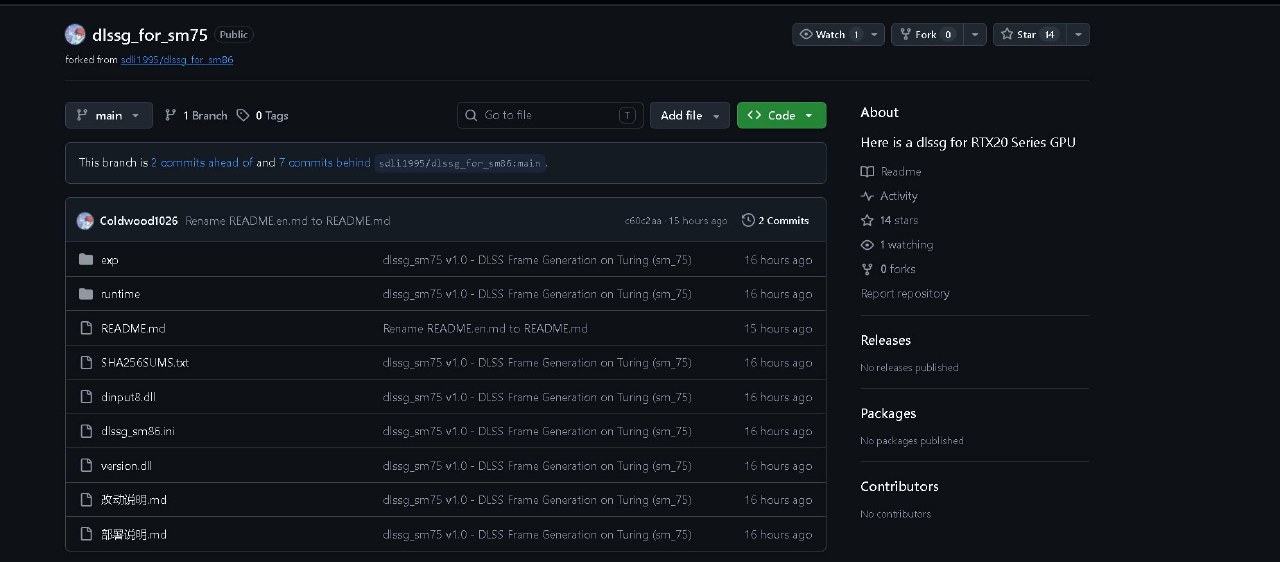
Independent developers have successfully bypassed Nvidia's hardware restrictions, enabling native DLSS Frame Generation on GeForce RTX 20 series graphics cards based on the Turing architecture. This achievement challenges Nvidia's official stance that frame generation requires the optical flow accelerators found exclusively in Ada Lovelace and newer architectures.
Unlike previous workarounds that redirected DLSS calls to AMD's FSR 3, this new mod utilizes Nvidia's native nvngx_dlssg 310.1 runtime library. Developers achieved this by recompiling the GPU kernels for the SM75 instruction set and spoofing the hardware identity, tricking the system into recognizing the RTX 20 series card as an RTX 40 series GPU.
Initial testing on a laptop equipped with a GeForce RTX 2060 Max-Q running The Witcher 3: Wild Hunt showed that the DLSS Frame Generation option became available and effectively doubled the frame rate. However, the mod is currently in an early experimental stage and remains unstable for daily use.
Users reported significant issues, including motion artifacts and ghosting when using 3X frame generation, and frequent crashes or screen tearing in 4X mode. Additionally, some players encountered compatibility errors, such as anti-cheat warnings or game crashes, when attempting to run titles like the Dead Space remake.
While the mod proves that Turing-based hardware possesses the necessary computational potential to execute DLSS frame generation, analysts note that the performance gains and latency do not currently outperform AMD's FSR solutions. Experts advise against using this unofficial patch on primary systems due to stability and security concerns.