

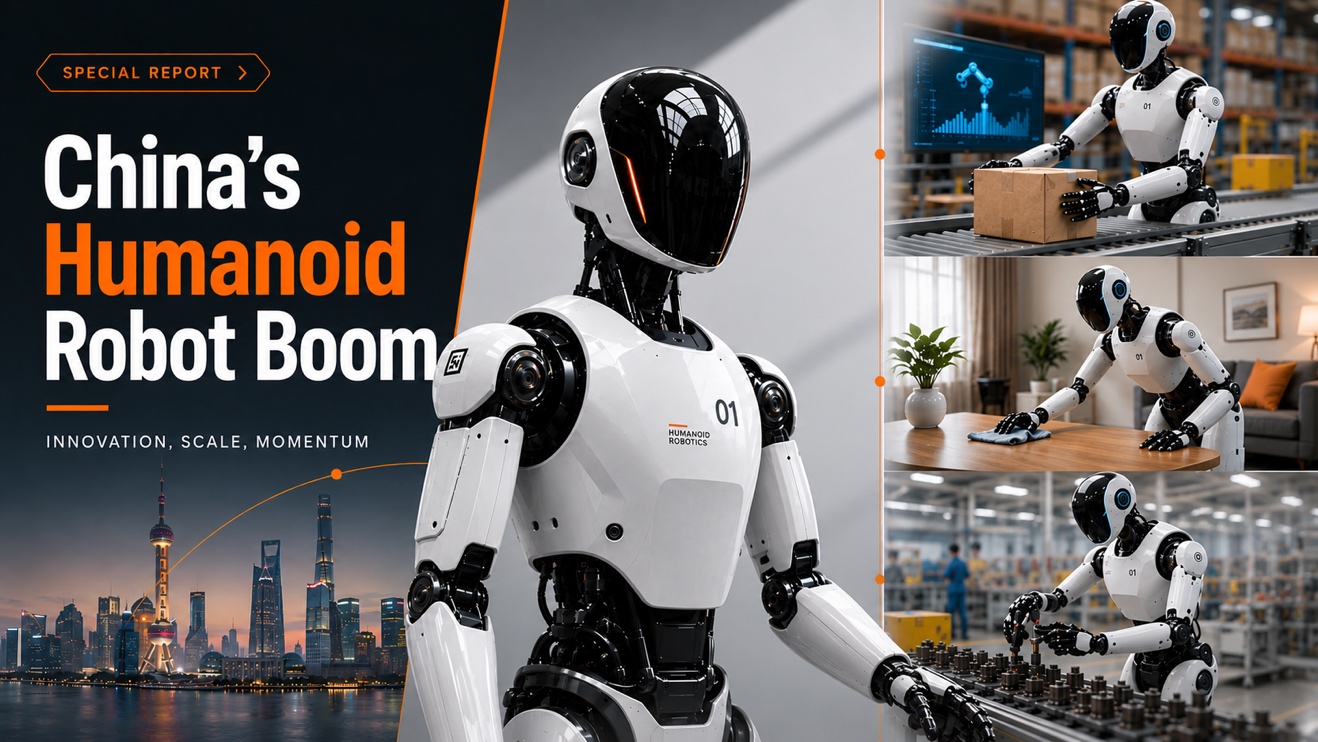
China's humanoid robotics sector is scaling rapidly, with five domestic firms accounting for 86% of global shipments in the first half of 2026. This growth is supported by a robust local supply chain, including EV battery and sensor components, which helps manufacturers reduce costs and accelerate hardware iteration.
Capital investment in the industry remains high. In August 2026, the robotics unit of XPeng raised over $900 million, reaching a valuation of more than $6.3 billion. Earlier, in March, Galbot secured RMB 2.5 billion, following a late 2025 round that valued the startup at approximately $3 billion.
Despite the surge in funding and production, commercialization is still in its early stages, consisting primarily of pilots and preorders. Robots are currently being tested in sectors such as automotive manufacturing, electronics, logistics, aerospace, and energy, though large-scale repeat orders remain limited.
Technical challenges persist, particularly regarding AI software and data acquisition. Many startups rely on Nvidia Orin chips, while developers work to overcome the 'last 1%' reliability hurdle. Experts suggest that long-term success depends on combining supply-chain advantages with the ability to solve complex, unstructured tasks.


