

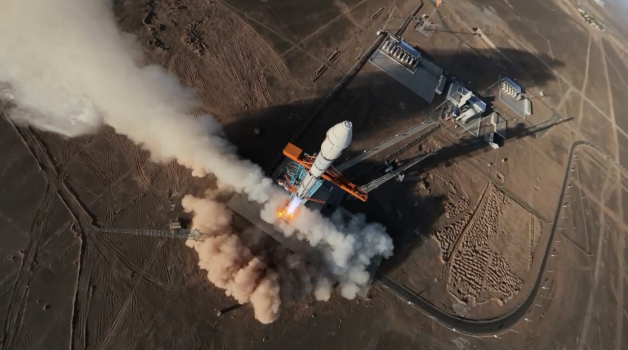
China is advancing its space program with the Tianwen-3 Mars sample return mission, currently in the prototype phase. The project targets a 2028 launch using two Chang Zheng 5 rockets, with surface sampling in 2030 and a return to Earth by 2031. The mission aims to collect 500 grams of subsurface samples from one of eight candidate landing sites.
The Chang'e 7 lunar mission has been delayed from 2026 to early 2027 due to weather and orbital constraints. Meanwhile, the Chang'e 8 mission is scheduled for 2029, targeting the lunar south pole with international participation from 11 countries. Separately, Tsinghua University is developing the 300 kg START spacecraft for a 2029 flyby of the asteroid Apophis.
China is expanding its launch infrastructure, including a third phase of development at the Wenchang spaceport, which will add four universal pads. The Hainan International Commercial Aerospace Launch Company expects to complete its first droneship for offshore stage recovery by the end of the year, capable of 30 to 40 missions annually with a seven-day cycle.
The commercial sector is also growing, with Space Epoch targeting a maiden flight of its Yuanxingzhe-1 vehicle this year and commercial operations in 2027. Galactic Energy is developing the Pallas-2 rocket powered by the new 100-ton-class Cangqiong-90 engine. Additionally, a new commercial sea spaceport is under construction in Shanghai, scheduled to begin operations in 2027.



