

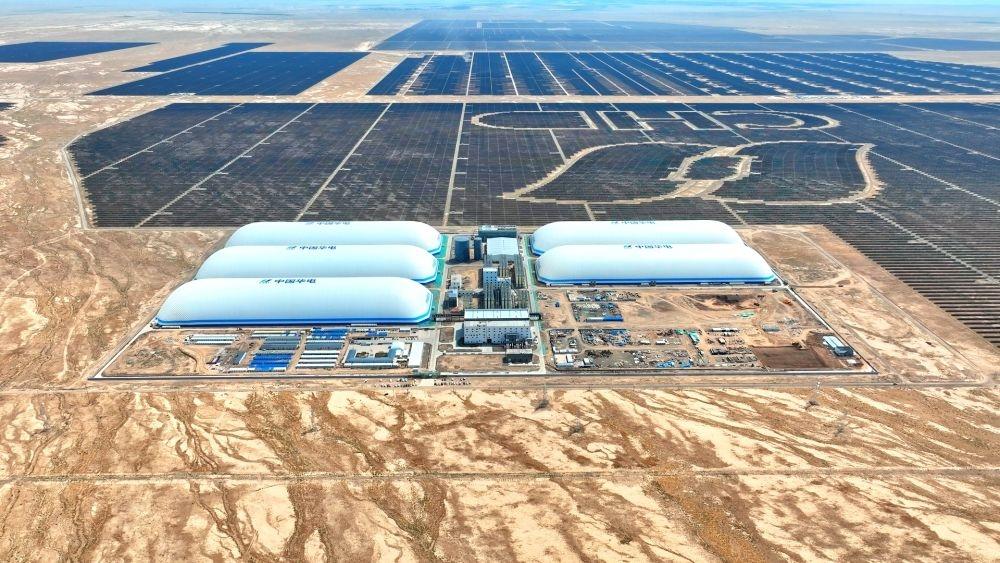
The China Huadian Xinjiang Mulei Compressed Carbon Dioxide Energy Storage Project has been connected to the power grid. This facility features a power capacity of 100 MW and utilizes a closed-loop system where carbon dioxide transitions between gaseous and liquid states to store energy.
The system is designed to respond to load fluctuations within minutes. It stores energy during periods of low demand and releases it during peak hours. The complex has an annual storage capacity of 290 million kWh and can deliver up to 180 million kWh of electricity, maintaining continuous operation for over six hours.
The infrastructure consists of five gas storage units, 141 liquid storage blocks, and 97 thermal accumulators. The technology operates through six modules: gas storage, liquid storage, compression, heat accumulation, heat exchange, and expansion for power generation. It functions independently of geological conditions.
During the charging phase, excess electricity powers compressors to liquefy CO2, while generated heat is captured. During discharge, the liquid CO2 is evaporated and heated using the stored thermal energy. The resulting high-pressure gas drives a turbine, which powers a generator to feed electricity back into the grid.



