

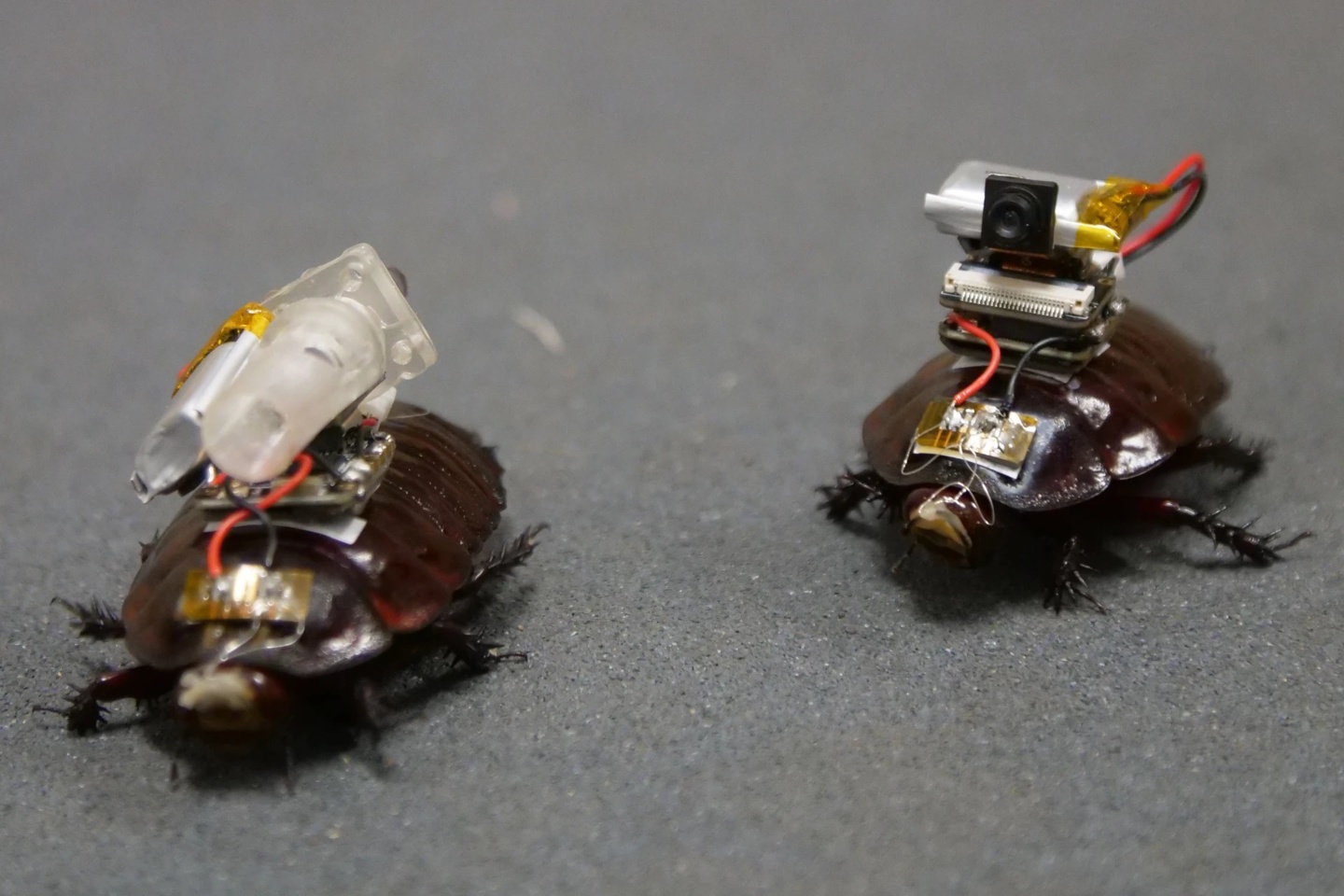
Researchers from the University of Queensland and the University of New South Wales have developed cyborg cockroaches designed for disaster search and rescue operations. These insects are equipped with lightweight cameras and automated syringes to navigate debris and assist survivors.
The system relies on human operators who remotely stimulate the cockroaches' antennae to guide them through rubble. In a dual-role setup, one insect acts as an observer using its camera, while the second carries a medical injector to provide aid.
During proof-of-concept tests using silicone models and pork, the injection mechanism achieved a 95 percent success rate when the target was within 15 centimeters. The overall success rate for the entire process, starting from the initial movement, was 72 percent.
The research team acknowledges that the technology is still several years away from practical deployment. Future plans involve creating specialized teams of various insects capable of environmental sensing and drug delivery, though the team has not yet tested the system on humans.
The project has sparked ethical debates regarding the use of insects in medical roles. Researchers stated that the cockroaches are anesthetized during equipment installation and continue to function normally afterward, while critics remain concerned about the appropriateness of the method.

