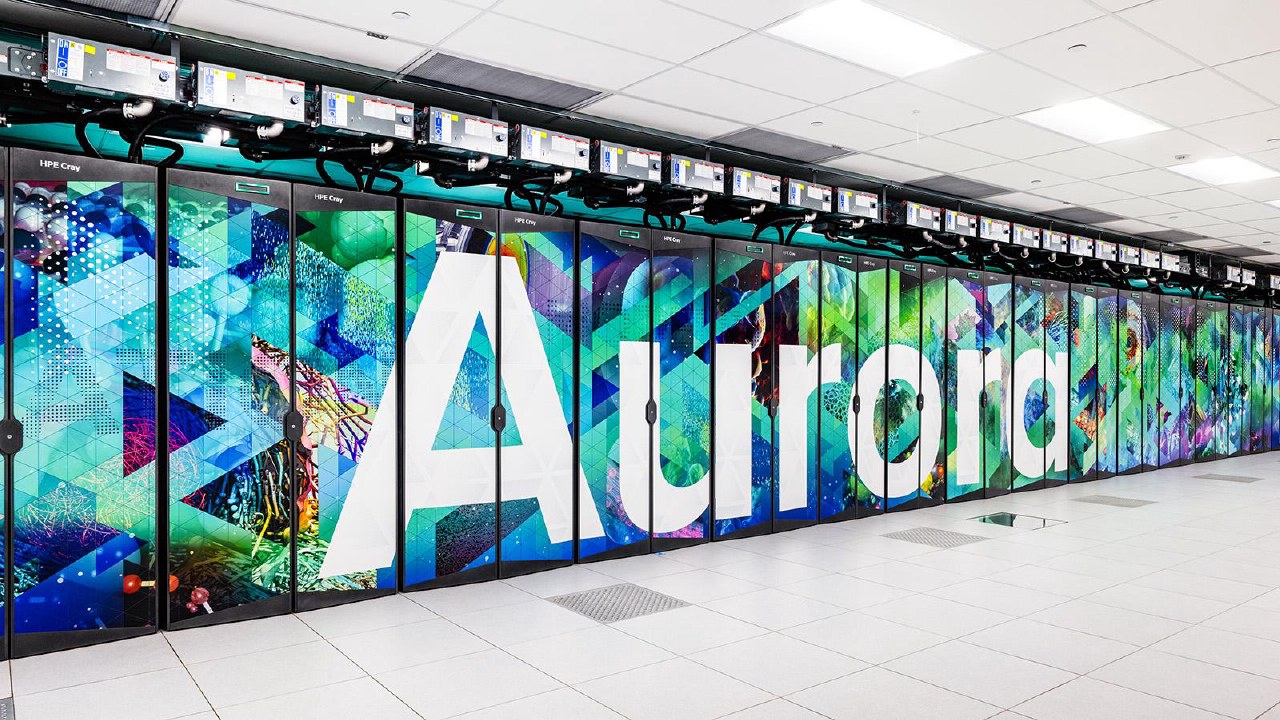
Researchers at the Argonne National Laboratory have completed two large-scale cosmological simulations using the Aurora supercomputer. Each simulation tracked 13.4 trillion dark matter particles across a region spanning 28.6 billion light-years.
The Aurora system, capable of over one quintillion operations per second, utilized approximately 8,100 compute nodes and 50,000 graphics processors for the task. The entire calculation and analysis process was completed in about four days.
The project aims to study cosmic inflation by analyzing the distribution of dark matter. Researchers are looking for statistical deviations in initial fluctuations to differentiate between competing inflation models, while managing limitations caused by cosmic variance.
To improve accuracy, the team used two simulations with identical cosmological models but inverted initial phases. This approach helps mitigate random variations. The researchers also employed a blind analysis technique to validate their procedures.
The project generated over 85 petabytes of data, with 8 petabytes reserved for scientific analysis. These models will support the DESI spectroscopic survey and the NASA SPHEREx mission by providing synthetic sky maps to test observation methods.