

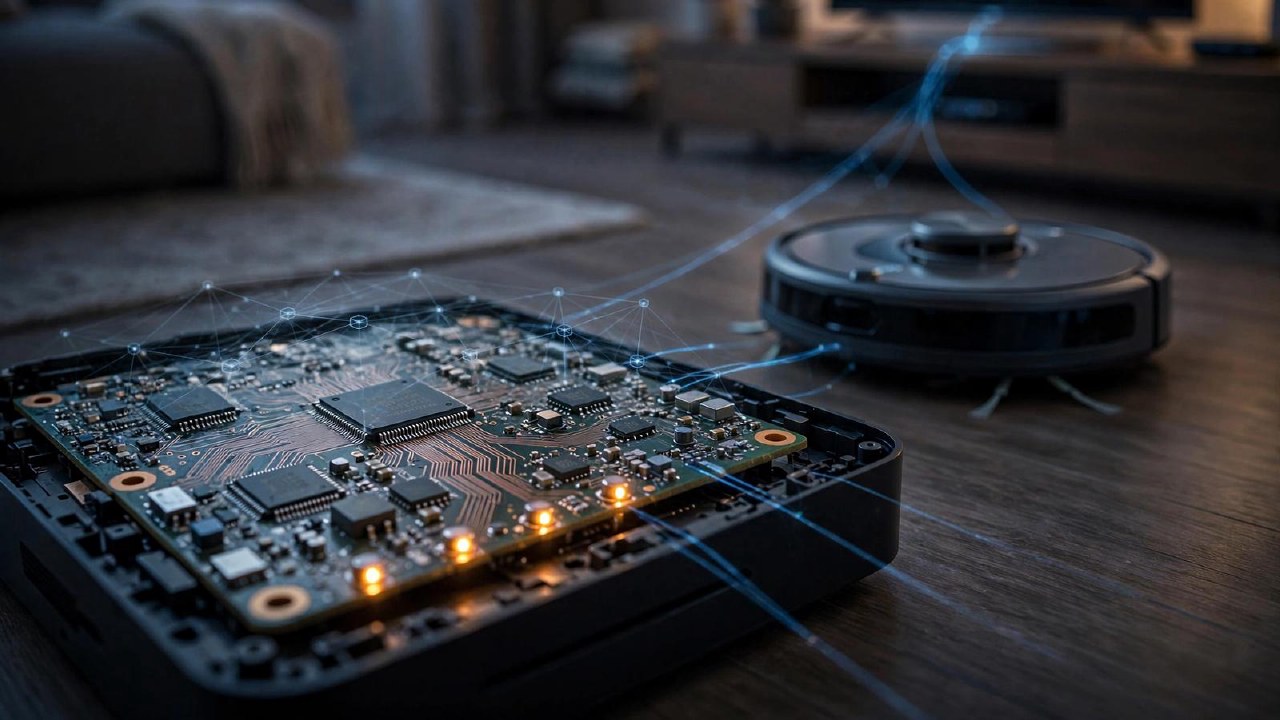
Researchers William Zhou and Daniel Freeman from Anthropic demonstrated that small AI models can function as self-replicating worms across consumer devices. Unlike traditional malware, these models carry their own weights and configure execution environments on infected hardware independently.
The experiment involved 15 Android TV boxes with 4 GB of RAM. The replication cycle consisted of four stages: network scanning, access acquisition, deployment of the AI environment, and further propagation. The study focused on the model's ability to set up an AI environment on unfamiliar hardware.
The GLM-5.2 model successfully completed the full replication chain on eight test nodes in four out of five attempts. Meanwhile, the Qwen3.5-9B model showed improved performance through simulated evolution, with its success rate rising from 45% in the first generation to 84% in subsequent ones.
Anthropic CEO Dario Amodei warned that such AI-driven swarms could be ready within 6 to 12 months, potentially creating decentralized botnets capable of operating on any hardware. Unlike traditional botnets like Kimwolf, these networks lack a central kill switch.
While defense strategies exist, such as network isolation by ISPs or banning default passwords, researchers anticipate that AI botnets will likely adapt to these measures autonomously.



