

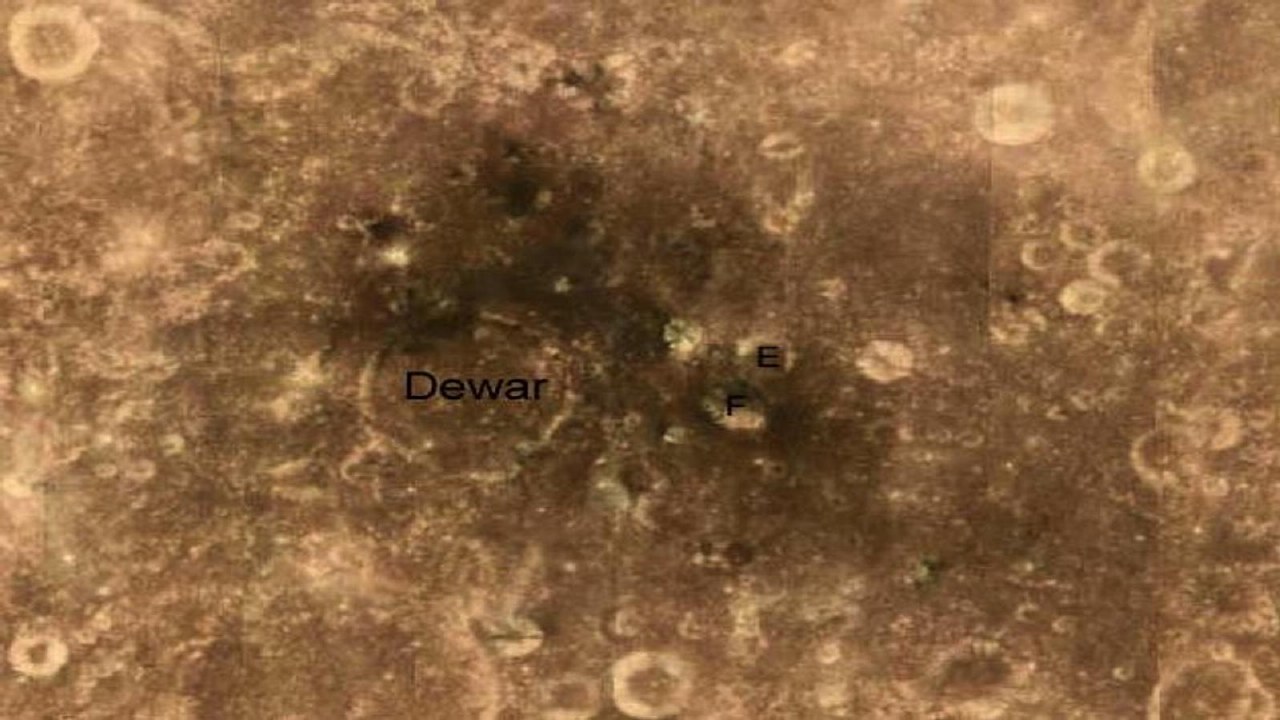
A research team led by ETH Zurich scientists identified a volcanic complex on the far side of the Moon, dating back 4.2 billion years. The discovery relies on the correlation between gravitational and magnetic anomalies found near the Dewar crater, rather than lunar rock samples.
Data from NASA's GRAIL mission, the Lunar Prospector, and the Japanese Kaguya probe revealed a highly magnetized object beneath the crater. It measures approximately 60 kilometers in diameter and sits at a depth of about 9 kilometers, indicating a solidified magmatic chamber.
The findings suggest the Moon possessed a magnetic field generated by a molten iron core. Researchers estimated the ancient lunar field strength at over 10 microtesla, compared to Earth's current field of about 50 microtesla. This confirms the existence of a long-lived dynamo.
The study, published in Science Advances, excludes impact magnetization as the source of the anomaly. Scientists are now investigating how such a small lunar core could generate a magnetic field of this magnitude.



