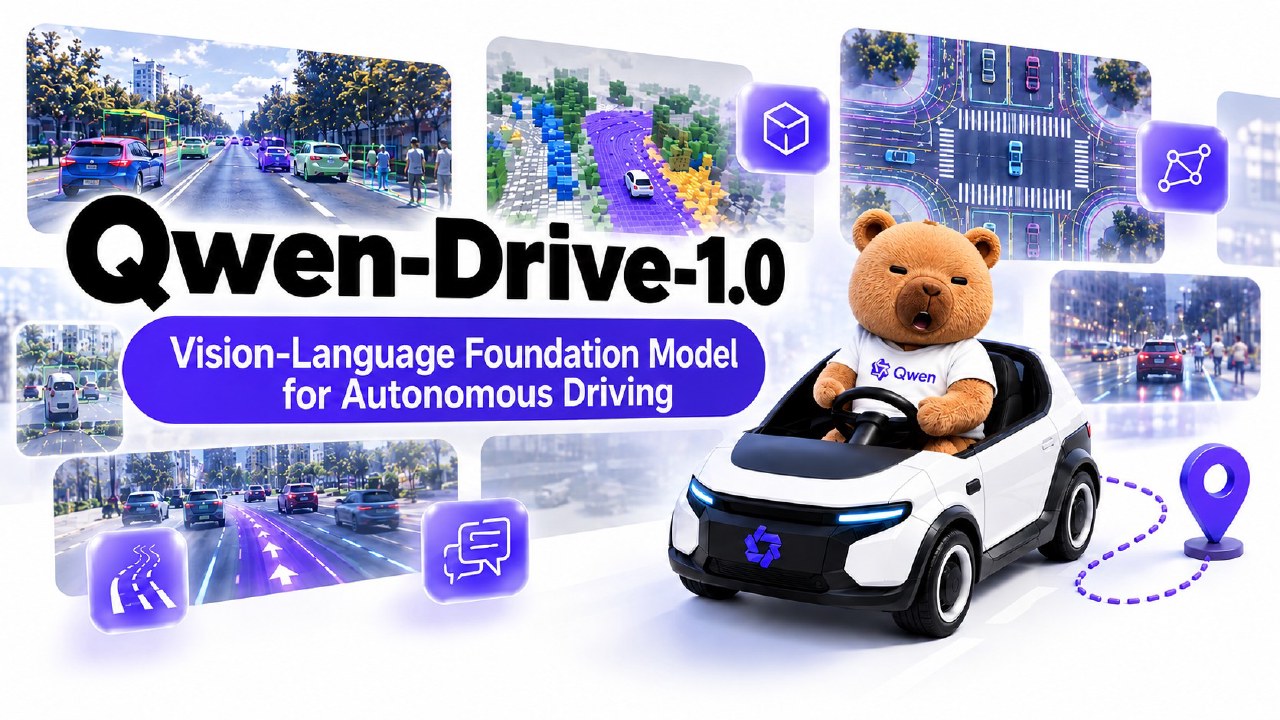
Alibaba's research division has developed Qwen-Drive 1.0, an AI model designed for autonomous driving. The system integrates three core functions: spatial perception of the environment, route planning, and the ability to answer questions about traffic situations.
The model is based on Qwen3.5-4B, released in February, and introduces two new components. A bird's-eye-view map generator identifies 3D objects and road layouts to improve spatial awareness. A Planning Expert component uses internal data to determine the car's future movements.
Training involved a combination of 24 public traffic scene datasets, which were standardized by another AI model. The team also created custom examples explaining driving decisions, such as braking triggers. The final refinement was achieved through reinforcement learning.
In simulator tests, the version retrained with rewards reduced the rate of cars veering off the road from 24 percent to 12 percent. The model outperformed the base Qwen3.5-4B model in traffic scene questions, particularly in explaining cause and effect.
Despite these improvements, the model's explanations do not always match its actual maneuvers. It can conflate different triggers for braking, such as a red light and a child in the road. The Qwen team is releasing the model for free on Hugging Face, ModelScope, and GitHub for research purposes.