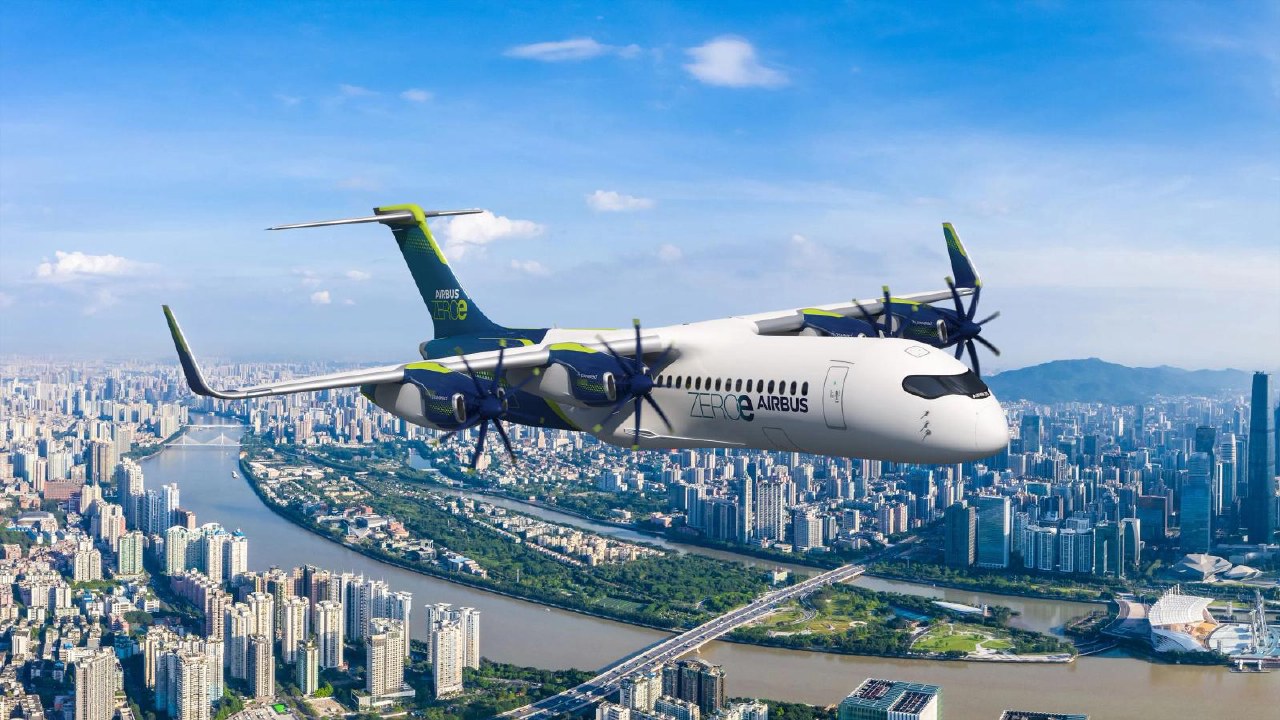
Airbus is exploring the development of a hydrogen-powered passenger aircraft designed to carry approximately 80 people. According to Lars Wagner, head of the commercial aircraft division, the initial version of the plane is expected to have a flight range of about 1,000 nautical miles, which is equivalent to 1,850 kilometers.
This new concept follows a shift in strategy from the previous ZeroE project, which originally targeted a 100-passenger turboprop aircraft with a range of 2,780 kilometers. The company revised these plans in 2025 to better align with the technical constraints of hydrogen propulsion systems and onboard fuel storage capacities.
The 80-passenger capacity is intended to balance technical feasibility with economic viability for the first generation of the aircraft. Airbus plans to increase seat counts in future iterations. Initial technology testing may involve a smaller aircraft capable of carrying around 20 people, though specific design details remain undisclosed.
If finalized, this project would mark the first time Airbus produces a commercial aircraft with a capacity of fewer than 100 passengers. Currently, the smallest narrow-body model in the company's lineup, the A220-100, accommodates 135 passengers, while the regional segment is typically served by the ATR joint venture.