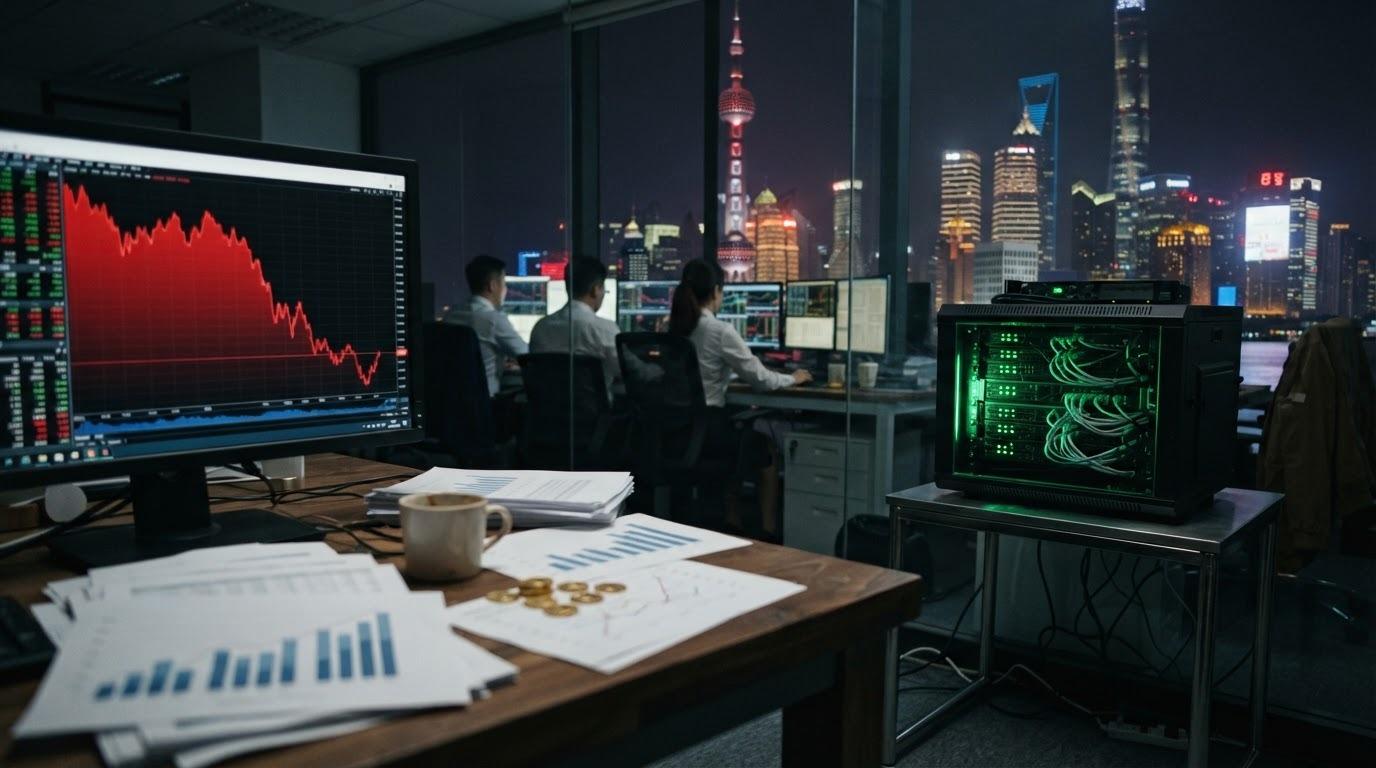
China's mainland exchanges saw a 25.7% year-on-year increase in corporate profits in the second quarter, marking the fastest growth in nearly five years. However, the CSI 300 index fell by approximately 9%, and the Star 50 index dropped 29% following a previous quarter's 76% surge.
Profit growth was concentrated in AI-related firms. Profits on the ChiNext exchange grew by 42%, while the Shanghai Stock Exchange's Star board saw a 370% increase, significantly outpacing the broader market. Despite this, investors are selling off tech stocks as previous optimism was already priced in.
Major players like Alibaba and Tencent are facing pressure. Alibaba's profits fell sharply due to AI project and computing infrastructure costs, leading the company to raise $10.2 billion. Tencent's AI capital expenditures rose 176% to ¥52.8 billion (approximately $7.87 billion), resulting in a negative free cash flow of minus ¥13.8 billion ($2.05 billion).
Market uncertainty regarding AI ROI and rising financing costs are weighing on the sector. Additionally, internal factors such as weak consumer demand, a real estate slump, and currency exchange losses of ¥107 billion (approximately $16 billion) for non-financial companies in the first half of the year are adding pressure.
China has become the first major market where AI capital expenditures have directly impacted reported profits. In contrast, Europe is in an opposite cycle stage; the European Commission has allocated €20 billion for gigafactories, receiving 77 applications from 16 countries and 60 sites, with the first construction starting in 2027.