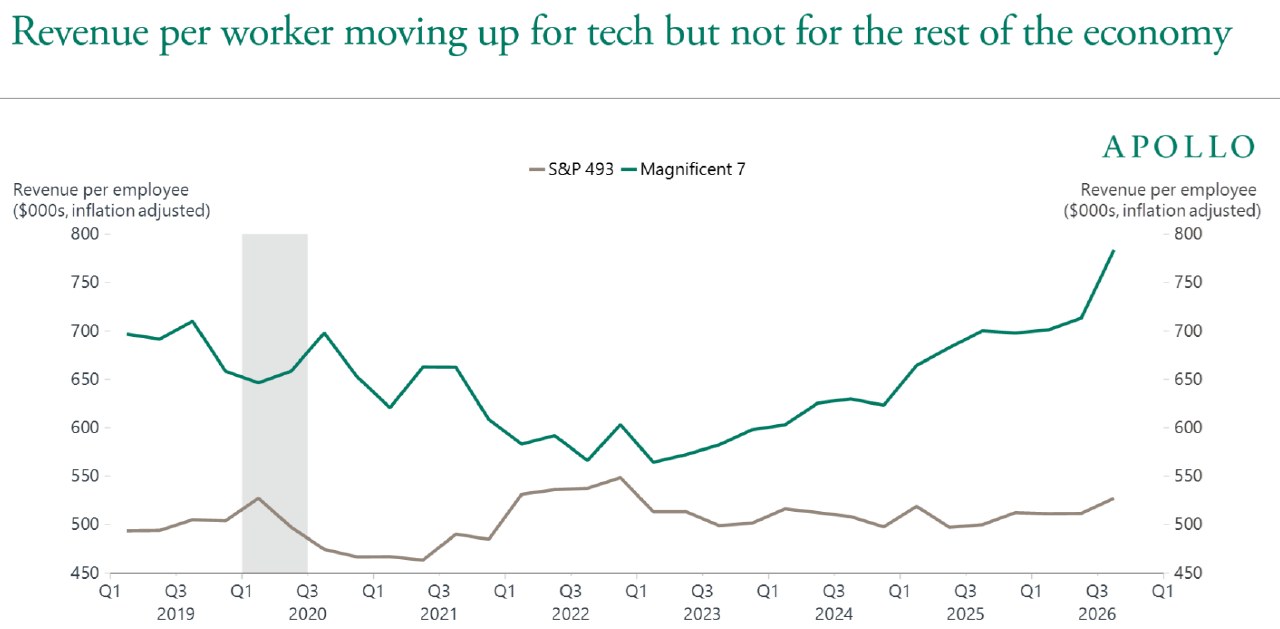
A recent analysis by Apollo Global Management indicates that the financial benefits of artificial intelligence are currently restricted to a small group of major technology companies. The study compares the performance of the 'Magnificent Seven'—Alphabet, Amazon, Apple, Meta, Microsoft, Nvidia, and Tesla—against the remaining 493 firms in the S&P 500 index.
Data shows that revenue per employee at the seven tech giants rose from an average of $550,000 in 2022 to nearly $800,000 in 2026. In contrast, this metric for the other 493 companies has remained stagnant at approximately $550,000 since 2019. Profit margins for the tech leaders have climbed since the third quarter of 2023, while margins for the rest of the market have stayed flat.
Apollo analyst Torsten Slok notes that mainstream corporations are increasingly viewing AI spending as a cost center rather than a growth driver. The report highlights that these businesses struggle to translate AI capabilities into higher revenue or improved productivity. Factors such as the need for human judgment, business culture, and accountability remain significant barriers to AI adoption.
The analysis concludes that the broader macroeconomic impact of AI remains limited as long as its benefits are confined to the tech sector. While some startups continue to increase their investment in AI tokens, established firms are showing reluctance to pay for the latest models. The long-term challenge for these companies is determining whether they can eventually leverage commoditized AI to drive actual financial growth.