

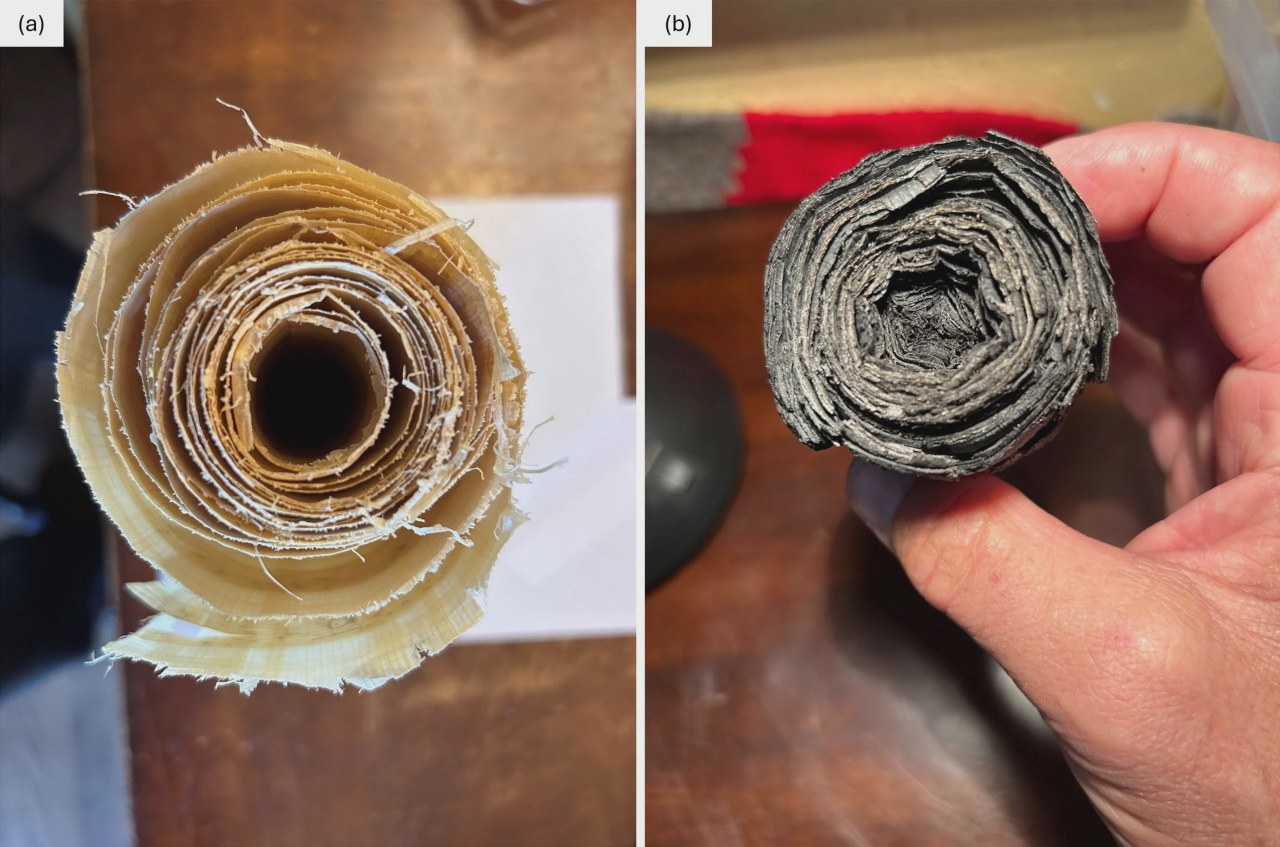
The Herculaneum scrolls were buried during the eruption of Mount Vesuvius in 79 AD. These papyrus documents were carbonized by volcanic ash and heat, making them too fragile for physical handling. A multinational team of scientists and computer experts is now using non-destructive imaging and AI to read the texts without damaging the artifacts.
The scrolls were discovered in the 18th century and represent the only surviving private library from the classical era. Because the ink and the carbonized papyrus have similar densities, traditional X-ray imaging failed to distinguish the writing. Researchers overcame this by using high-energy X-rays from a synchrotron to create high-resolution 3D models of the internal structures.
The team utilized computer vision and machine learning to process the data. A specialized algorithm identifies and flattens the folded layers of papyrus in a virtual space. Subsequently, deep learning models detect microscopic physical deposits left by the ink on the fibers, rendering the hidden letters and words visible.
Recent results include the successful reading of several previously unpublished philosophical treatises from the Epicurean school. Researchers expect that continued improvements in virtual unfolding and AI recognition will allow for the recovery of hundreds of additional scrolls, potentially providing new insights into ancient Mediterranean history and literature.

