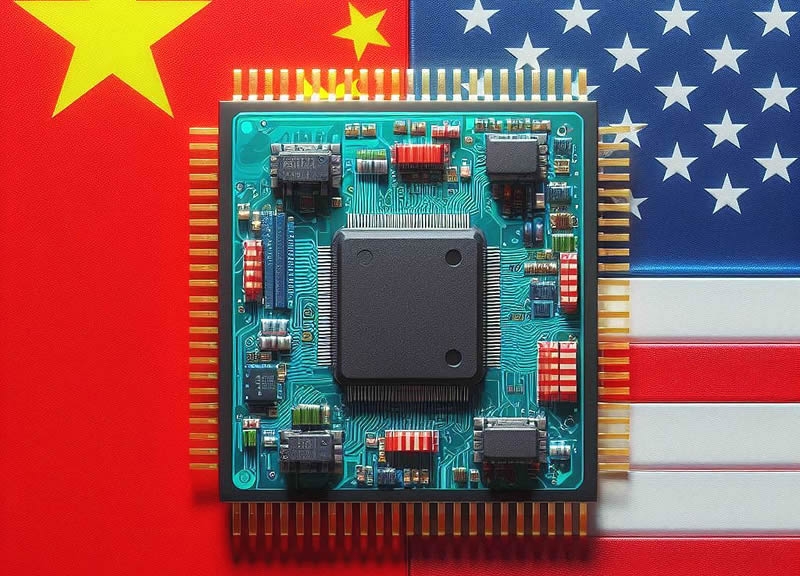
The US government is evaluating a tracking system for high-performance AI chips to prevent illegal exports to sanctioned countries, including China. The proposed technology uses geolocation and unique hardware identifiers to verify the physical location of GPUs.
Researchers from the Center for Security and Emerging Technology at Georgetown University suggest using Ping-Based Location Verification (PLV). This method measures the round-trip time of signals between a chip and trusted servers to estimate its location.
Manufacturers could integrate PLV mechanisms into new hardware or deploy them via firmware updates for existing devices. Additionally, encrypted digital sovereignty certificates could confirm the equipment's location at specific times.
The IEEE Spectrum reports significant limitations, as the system cannot track inactive chips in storage or transit. Furthermore, individuals with physical access could potentially block signals or compromise cryptographic keys, necessitating physical inspections of data centers.
Legislative efforts are underway following the 2022 export restrictions. In March 2026, the US House Foreign Affairs Committee approved a bill requiring location verification for advanced AI chips, with lawmakers pushing for a full vote as of September 2026.