Researchers at the University of Tokyo have developed a robotic human face model designed to replicate human anatomy with high precision. The project focuses on a muscle drive mechanism that places actuators outside the head to overcome space limitations within the facial structure.
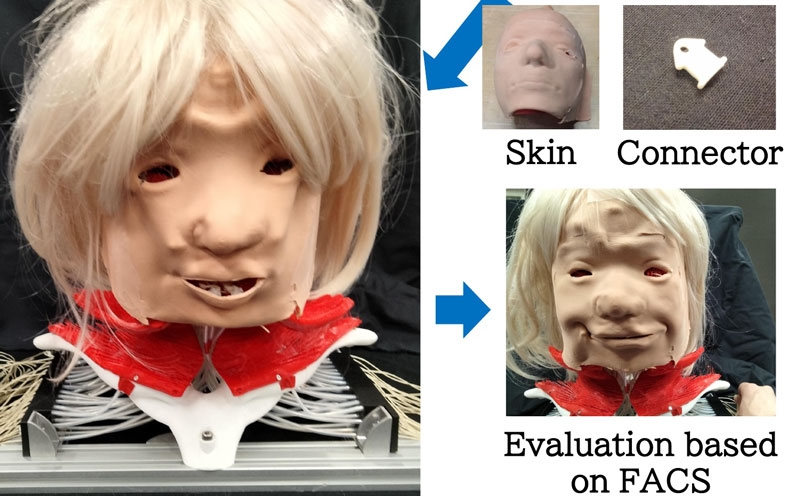
The prototype features 65 artificial muscles representing 34 anatomical types, constructed from thermoplastic polyurethane in a zigzag pattern. These muscles are controlled by tension cables routed through polytetrafluoroethylene tubes, allowing for remote operation. The face is covered with segmented silicone skin.
The team evaluated the system using the 1978 Facial Action Coding System, which identifies 47 basic movement units. Without skin, the robot achieved 40 of these movements; with the silicone skin applied, it successfully performed 30, including eyebrow movement and jaw articulation.
Current limitations include the inability to fully close the eyelids and difficulties with cheek inflation or complex lip movements. Researchers plan to integrate pneumatic actuators to address these gaps and transition from manual cable control to remote automated drive systems.