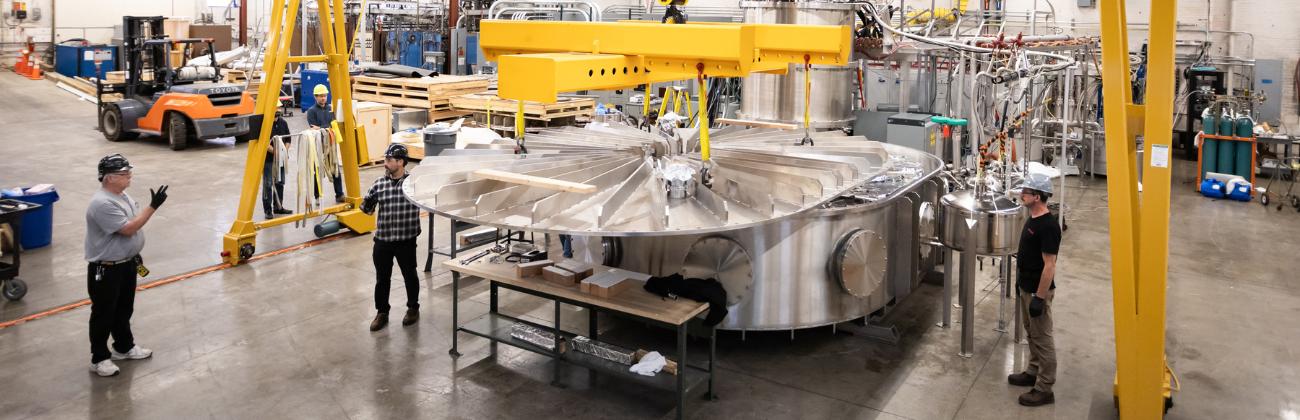
Thea Energy, in partnership with MIT, is testing a full-scale superconducting magnet for its Eos stellarator. The trials, conducted at MIT's cryogenic laboratories, aim to evaluate the coil's performance under extreme magnetic fields and mechanical stress to ensure reliability for future fusion power plants.
The Eos stellarator features a unique architecture using flat coils instead of complex 3D magnets. The design incorporates 12 large encircling coils to generate the primary magnetic field, supplemented by approximately 300 smaller, programmable magnets that allow for precise configuration adjustments and easier maintenance.
The company, founded in 2022 based on research from Princeton University and the Princeton Plasma Physics Laboratory, aims to launch a commercial fusion power plant by 2035. These physical tests are intended to mitigate technical risks and inform the development of the subsequent Helios project, which will also utilize flat magnet technology.
While Thea Energy previously announced collaborations with Nvidia, Synopsys, and other national laboratories to create a digital twin of the Helios plant, the current phase with MIT focuses exclusively on physical hardware validation. The small magnets have already been tested, and the current focus is on the primary encircling coil.