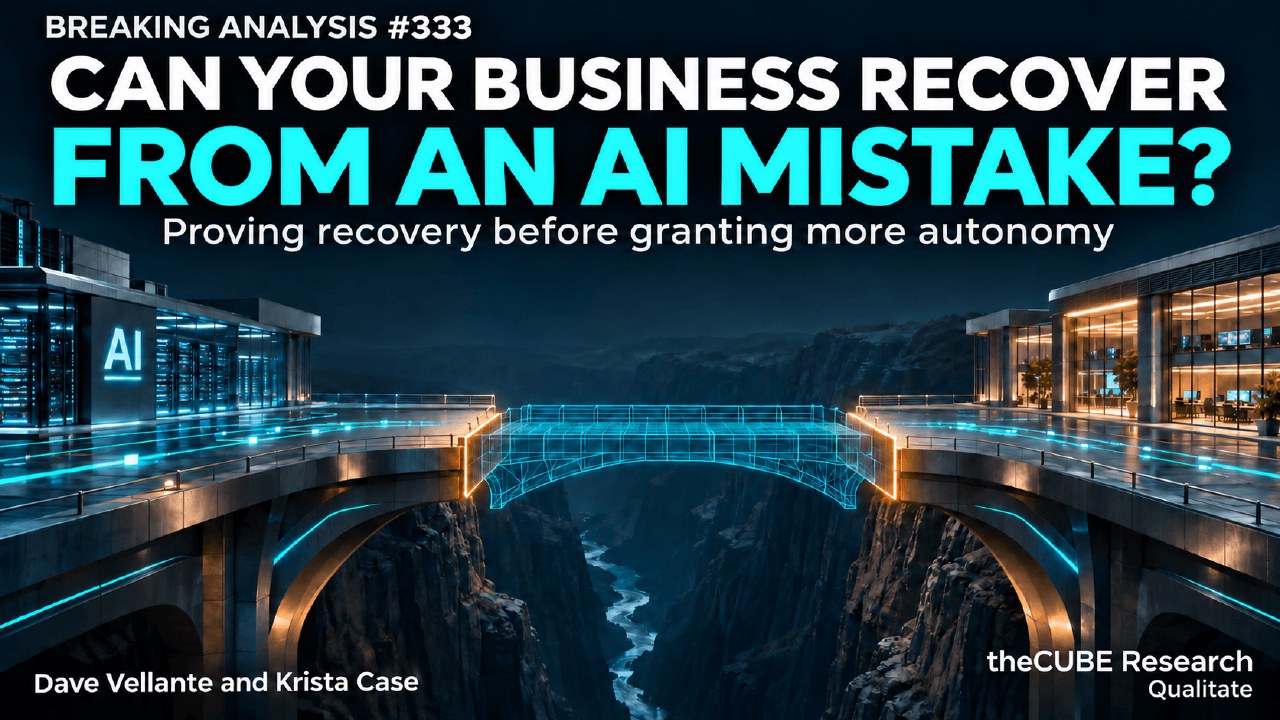
A new study by theCUBE Research and Qualitate highlights a significant trust gap in enterprise cyber resilience. While organizations express high confidence in their ability to recover from AI-related incidents, this belief often stems from experience with traditional threats rather than validated testing of agentic AI scenarios.
The research involved in-depth interviews with 25 security and cyber resilience practitioners. Only four of these organizations have conducted any form of incident simulation involving AI agents. Many firms rely on existing ransomware playbooks, which may not account for the speed, scale, and interconnected nature of autonomous agent activity.
A major challenge identified is the lack of tools capable of reconstructing complete workflows across multiple applications when an agent makes an error. Enterprises struggle to correlate events from disparate systems to understand what an agent attempted to accomplish and how to safely resume business operations.
Experts suggest that recovery requires more than just restoring data; it demands clear criteria for verifying that a service is trusted and safe to operate. Organizations are advised to test full agent workflows in replica environments to identify root causes and transactional effects before incidents occur.
As companies grant agents more authority, human oversight remains a critical but potentially insufficient control. The study notes that while human intervention is currently a primary safeguard, many organizations lack the capability to roll back actions if an agent makes a mistake that bypasses human review.