OpenAI CEO Sam Altman has suggested that local inference on consumer computers is an inefficient use of resources, noting that global DRAM stocks remain underutilized on personal devices. He emphasized that cloud-based computing allows for better resource allocation, though he has not announced plans to seize consumer memory modules.
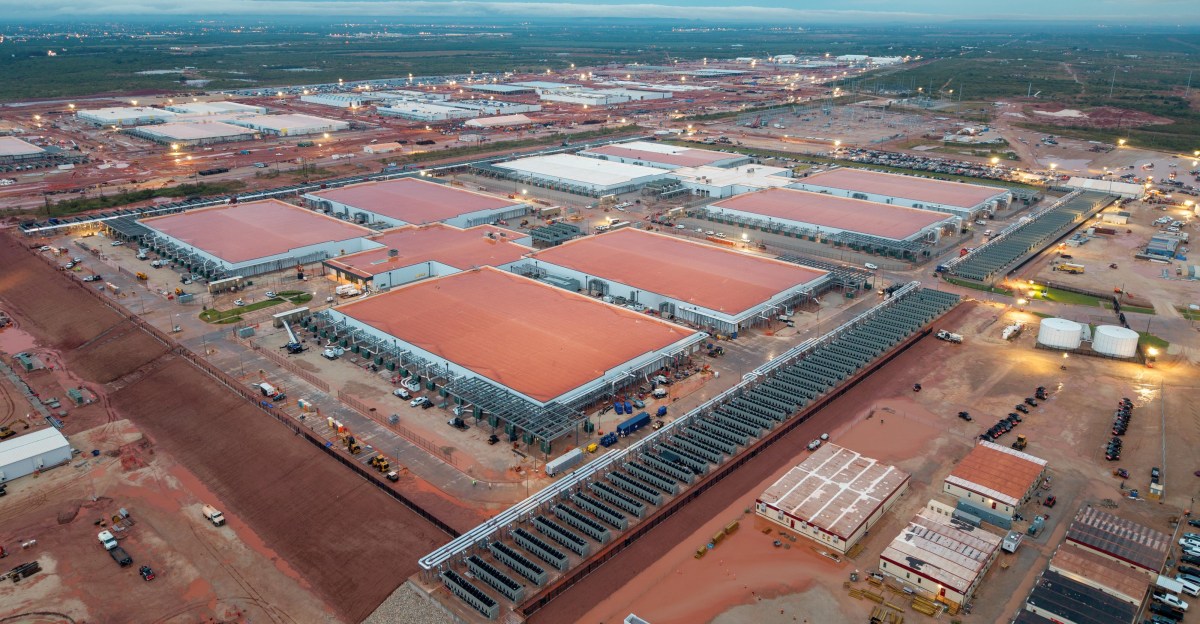
As of late 2025, OpenAI's computing power is estimated at 1.9 GW, equivalent to approximately 1.7 million Nvidia H100 GPUs. The company relies on cloud partners including Microsoft, Oracle, and CoreWeave. A single Microsoft cluster for OpenAI, featuring over 4,600 GB300 units, contains roughly 2.4 PB of high-speed memory.
Estimates suggest that global consumer devices, including PCs, smartphones, tablets, and consoles, hold between 34 and 74 exabytes of RAM. In contrast, OpenAI's infrastructure currently utilizes an estimated 0.24 to 0.37 exabytes. This represents a disparity of approximately 93 to 315 times between consumer and corporate capacity.
If all consumer memory were redirected to OpenAI, it would theoretically provide a one-time boost equivalent to 2.8 to 5.2 years of infrastructure development. However, consumer-grade DDR5 or LPDDR memory lacks the bandwidth of HBM3E used in data centers, which can reach 8 TB/s per GPU, compared to 0.05–0.1 TB/s for consumer modules.
Scaling infrastructure to utilize all consumer memory would require 177 to 599 GW of power and an estimated capital investment of 8.9 to 30 trillion USD. Furthermore, memory is not the sole constraint; training advanced models also requires specialized accelerators, massive energy supplies, cooling systems, and high-speed interconnects like NVLink.