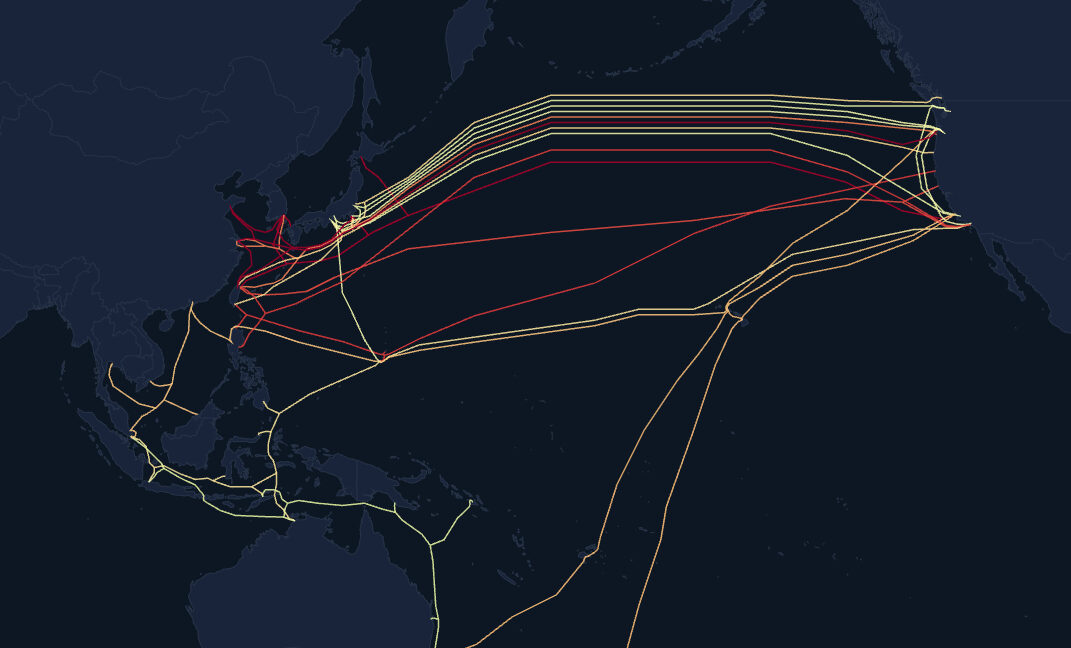
A September 2026 report by the US-China Economic and Security Review Commission highlights growing risks to trans-Pacific undersea cables. Analysts identify these cables as potential targets for gray zone tactics, which involve sabotage or tampering that avoids direct military confrontation.
The report introduces the Trans-Pacific Cable Gray Zone Vulnerability Index, which ranks cables based on depth, shipping traffic, and geopolitical factors. High-risk areas include waters near Taiwan, Japan, and the Philippines, where China maintains territorial claims.
Among the top five most vulnerable projects are cables owned by major US tech firms, including the TPU project by Google, the ORCA cable by Meta, and the E2A cable co-owned by Verizon. Disruptions could overwhelm current trans-Pacific data capacity.
A separate October 2026 report from the Center for Strategic and International Studies notes that Chinese research vessels frequently perform survey-like movements near subsea infrastructure. Data from 2020 to 2025 shows these ships spend significant time near cable routes.
Recent incidents include a 2025 case where a Chinese captain was sentenced to three years in prison by Taiwan for damaging the Tai-Peng 3 cable. Similar patterns of suspicious vessel activity near critical infrastructure have been reported in the Baltic and Arctic regions.