

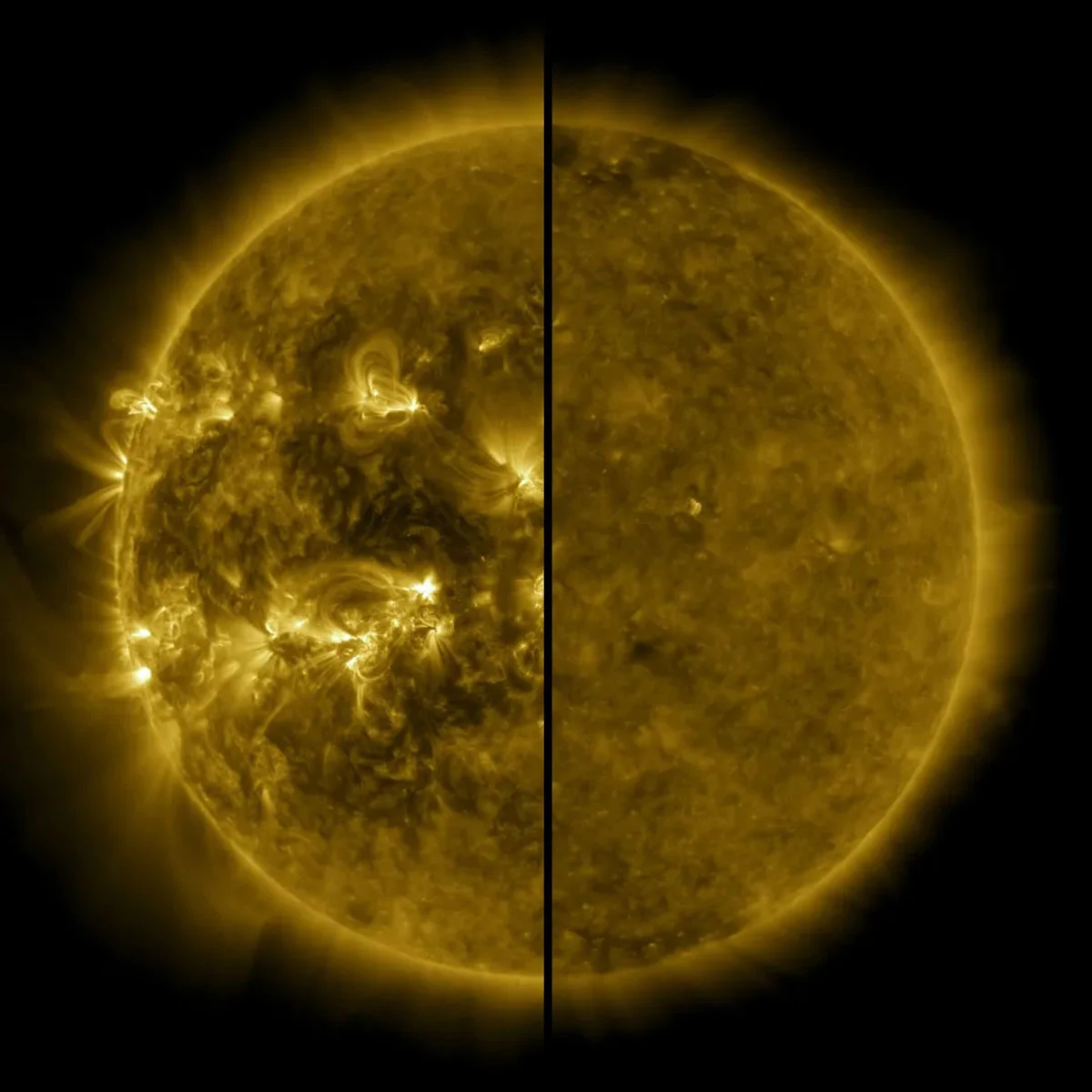
Scientists analyzed decades of solar oscillation data from the Birmingham Solar-Oscillation Network (BiSON), which consists of six telescopes globally. By tracking acoustic waves, researchers compared the solar minimums between different 11-year cycles, specifically focusing on the transition between the 24th and 25th cycles.
The study revealed that solar minimums are not identical. During the most recent minimum, measurable changes occurred in the sun's internal structure and oscillation characteristics, extending beyond surface activity. These shifts in frequency and propagation patterns indicate that the sun's physical state changes deep within its outer layers.
These findings provide a new observation window into the sun's magnetic dynamo mechanism and internal plasma flows. Understanding how these cycles leave internal imprints helps explain variations in cycle intensity and magnetic structure, which are critical for improving space weather forecasting and protecting Earth's infrastructure from geomagnetic storms.



