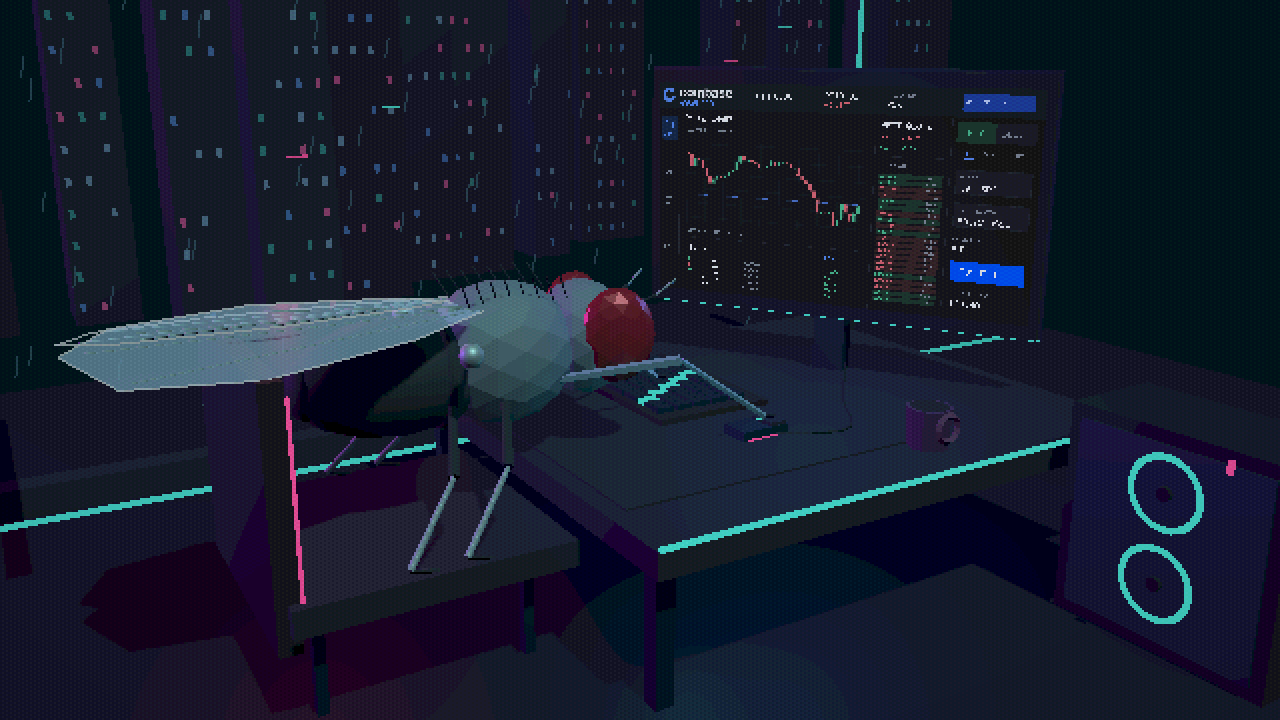
The open-source project features a simulation of a male fruit fly brain designed to trade cryptocurrencies. The system utilizes 166,700 virtual neurons and 25.6 million connections to process historical candlestick charts. The fly receives visual data through a 320x180 display, with profitable trades triggering a dopamine signal in 15 cells, while losses activate two aversive cells.
The simulation operates with a 500 ms thinking interval and refreshes market data every 60 seconds. The agent is restricted from using leverage or short positions and can execute up to 24 orders daily, with a maximum bet of $10 per order. The model uses real BTC-to-USDC market data, starting with a virtual balance of $100 for paper trading.
To run the simulation, users require a macOS or Linux environment, 16 GB of RAM, Python 3.11, and a C++ 17 compiler. The author emphasizes that the project serves as a demonstration of visual signal processing and synaptic changes rather than a functional trading tool. Users are cautioned against interpreting the results as evidence of genuine financial expertise.