

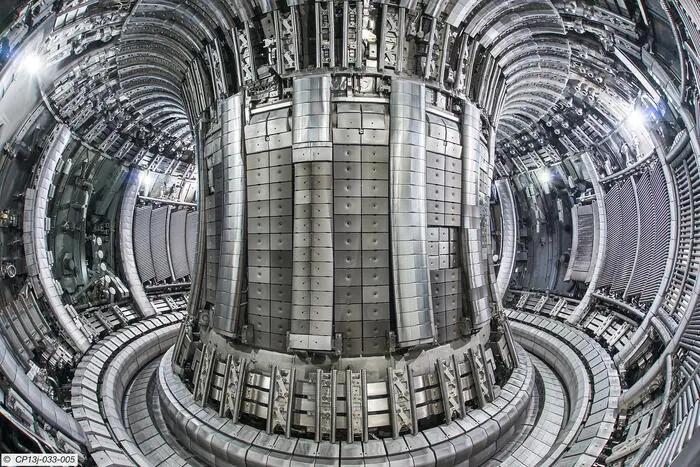
Rosatom has completed a key testing phase for tungsten armor designed for the first wall of the ITER international fusion reactor. The qualification trials were conducted by experts at the Efremov Institute of Electrophysical Apparatus in Saint Petersburg.
The first wall serves as a protective barrier between the extremely hot plasma and the reactor structure, enduring intense thermal loads. Russian engineers adapted manufacturing processes to work with tungsten, which was selected as the material for the wall lining three years ago.
Researchers utilized a vacuum rapid brazing method to bond the tungsten lining to structural components, ensuring both durability and high thermal conductivity. The prototypes underwent ultrasonic testing and thermal cycling to verify the integrity of the joints.
The successful completion of these tests validates the current technological approach for panel production. The qualification program is scheduled to continue until 2028, after which Rosatom plans to initiate full-scale serial production of the tungsten panels.
ITER is a large-scale experimental fusion reactor currently under construction in France. Its primary objective is to demonstrate the feasibility of controlled nuclear fusion for energy production by maintaining plasma stability, rather than generating electricity for the grid.


