

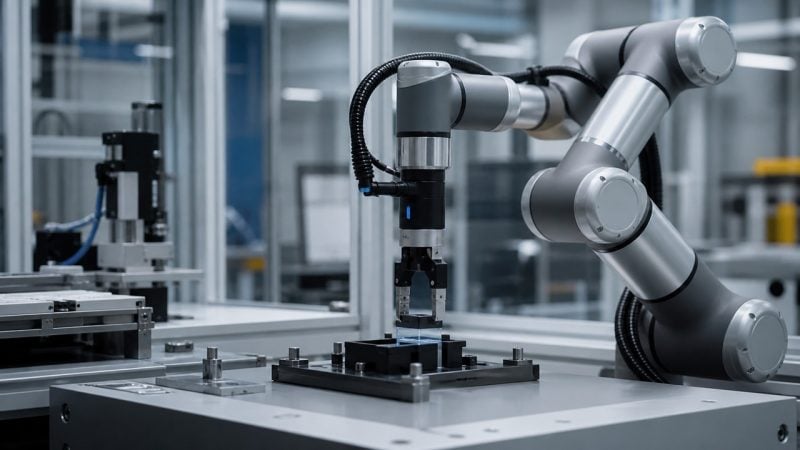
Robotics companies are shifting their training strategies from simulation to large-scale collection of human motion and video data. This transition aims to overcome a data bottleneck in developing physical AI capable of performing complex real-world tasks.
Dyna Robotics reported that its Dyna-2 model improved its task success rate from 20% to 53% in August 2026. This performance gain followed an increase in the training dataset from 1,000 hours to over 1 million hours of egocentric video footage.
Industry players are adopting various data collection methods. Innodata opened a motion-capture lab in New Jersey on September 30, 2026, using Vicon infrared cameras. Agile Robots launched its Robot Academy in Munich around October 8, 2026, to convert worker videos into trajectory data.
Scale AI is managing data factories and robot gyms across Mexico, China, and Indonesia to gather diverse training material. Overall, companies in the robotics and physical AI sector have secured nearly $48 billion in funding during 2026.



