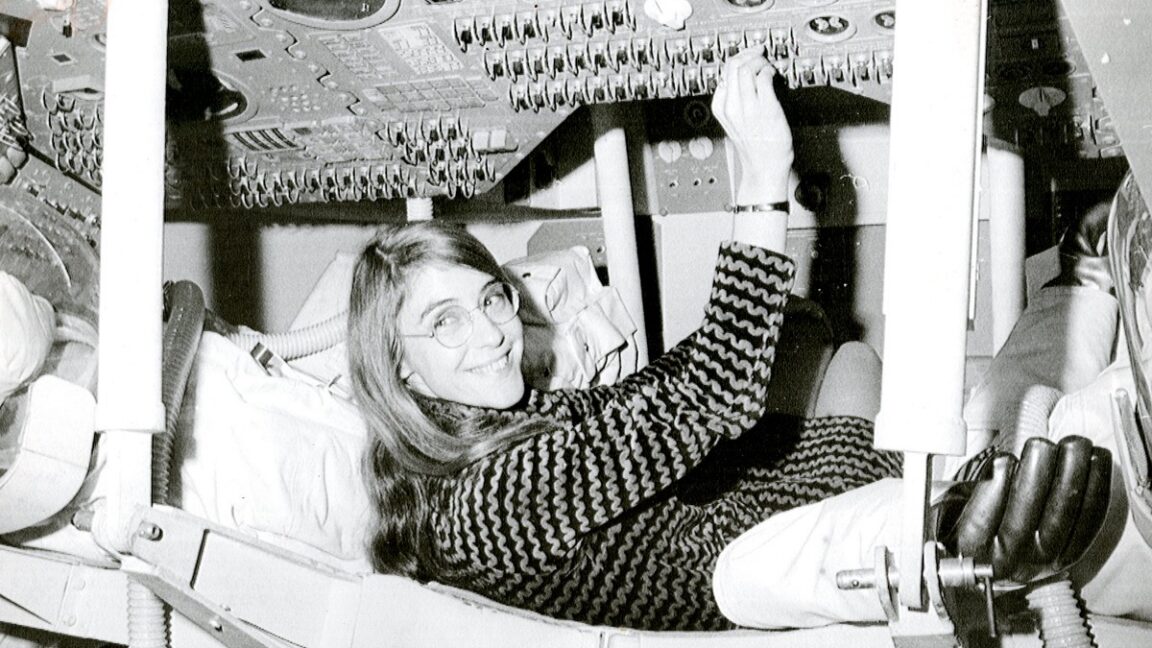
Margaret Hamilton, a pioneering software engineer, passed away. Born in 1936, she began her career at MIT, where she programmed the LGP-30 computer for weather simulations under Edward Lorenz. In 1961, she joined the SAGE project, developing software for the US Air Force to identify potential enemy aircraft.
In 1965, Hamilton became the first programmer hired for NASA’s Apollo program. She led the team responsible for the onboard guidance software, which was used across six lunar missions between 1969 and 1972. Her work involved managing complex systems where binary code was physically woven into ropes by textile workers.
Hamilton introduced a critical failsafe into the Apollo guidance software to handle real-time system overloads. This mechanism proved essential during the 1969 Apollo 11 mission, allowing the computer to prioritize vital landing tasks when it became overwhelmed. This foresight ensured the lunar module landed safely.
Following her tenure at the MIT Instrumentation Lab, which later became the Draper Laboratory, Hamilton founded Higher Order Software in 1976. In 1985, she established Hamilton Technologies, focusing on the Universal Systems Language, a tool designed to prioritize error prevention and defensive programming in complex systems.