

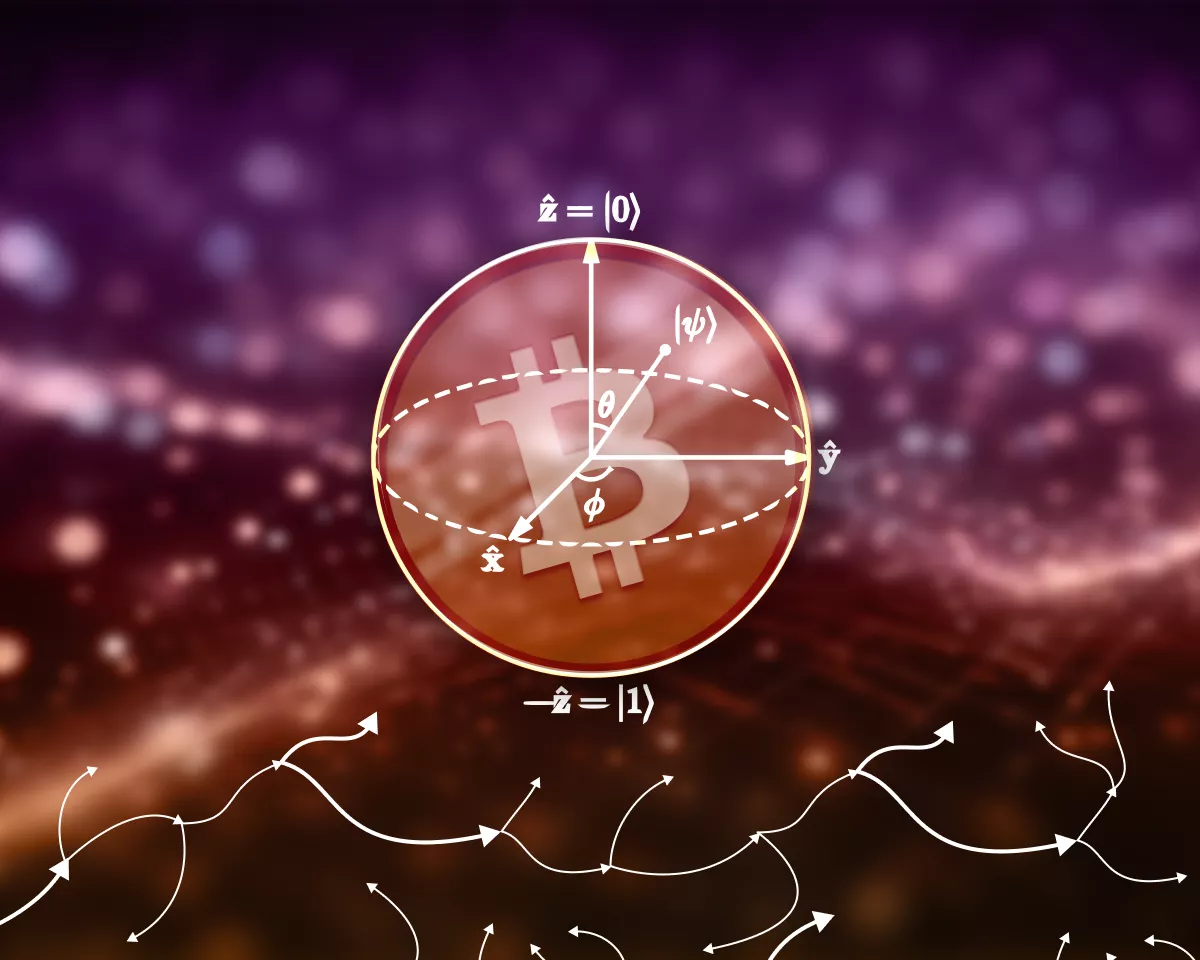
QuFi Network has launched a post-quantum verification platform designed to secure digital assets against future quantum threats without requiring modifications to existing blockchain networks. The solution was demonstrated using the Bitcoin Testnet4, where developers successfully tested the uBTC proof-of-concept for issuing, burning, and redeeming assets.
The platform functions by separating transaction verification from final execution. A network of independent nodes performs cryptographic checks before funds are moved, subsequently submitting a compact proof to the blockchain. This architecture avoids the need for individual blockchains to handle the increased computational and data loads associated with post-quantum cryptography.
The system utilizes three standards developed by the US National Institute of Standards and Technology: ML-DSA-65 for digital signatures, SLH-DSA as a supplementary hashed signature scheme, and ML-KEM-1024 for secure key exchange. This approach prevents the potential network strain caused by the larger size of post-quantum signatures compared to traditional methods.
Currently, the system operates exclusively within the testnet environment. QuFi plans to expand its solution to include EVM-compatible networks, Stellar, and Solana. Additionally, the company has launched the Genesis Node program to recruit operators for its decentralized verification network, aiming to eventually provide a unified verification layer for multiple financial systems.