

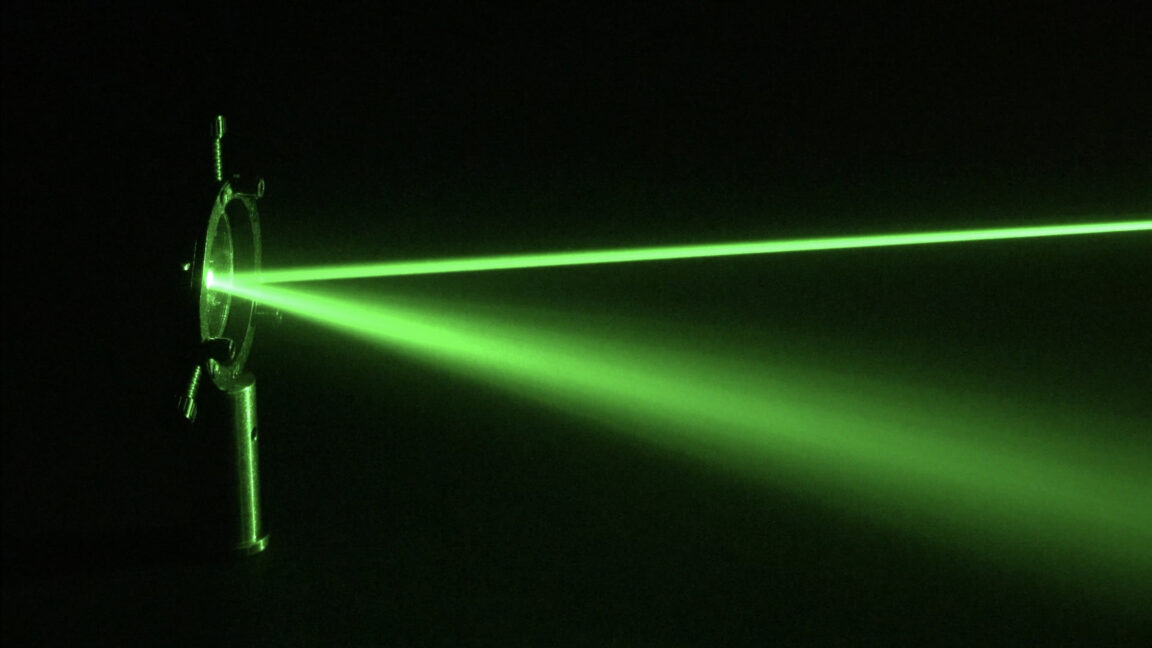
Researchers have achieved quantum entanglement between a glass bead and a light field. The experiment utilized optical tweezers created by laser light confined within an optical cavity to suspend and manipulate the bead.
To maintain stability, the bead was cooled by adjusting the laser frequency to a redder color, utilizing the Doppler effect to reduce the bead's vibrational energy. This process slowed the bead's motion within the laser trap.
Entanglement was initiated by shifting the laser frequency toward a bluer color, which added energy to the system. This created a correlation between the light fields and the physical motion of the glass bead.
The entanglement was observed by analyzing light leaking from the optical cavity mirrors. These light fluctuations in phase and amplitude provided evidence of the correlation between the light and the bead.
This setup is considered a potential candidate for quantum memory. Because the system is artificial, researchers aim to design it with specific properties to store quantum information locally.

