

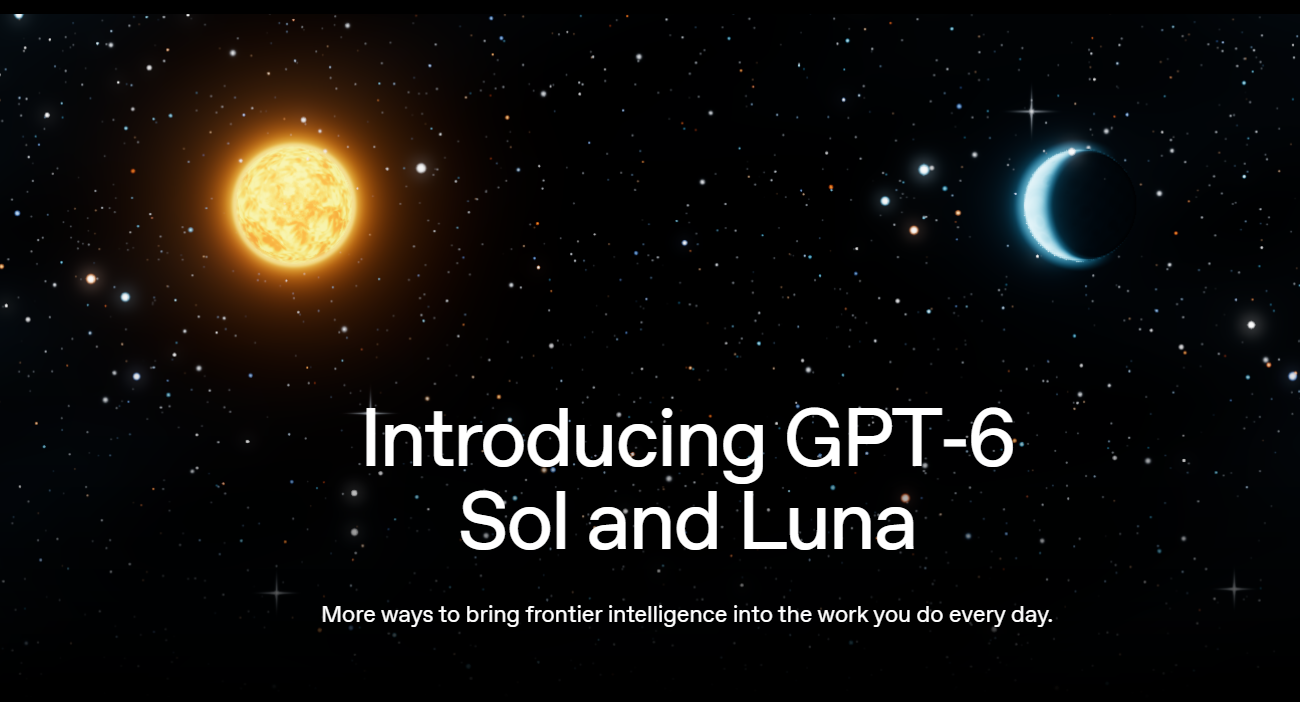
OpenAI has introduced two new models, GPT-6 Sol and GPT-6 Luna, which utilize training methods similar to the GPT-6 Astra model. These new versions are designed to offer high performance in professional tasks, coding, and factual accuracy while maintaining faster speeds and lower operational costs.
The API pricing for both Sol and Luna is 50% lower than the promotional rates of the GPT-5.6 series. OpenAI also updated its prompt caching system to improve hit rates, allowing developers to reuse more context and achieve faster response times in their applications.
In AutomationBench tests, GPT-6 Sol outperformed Claude Opus 5 at a 9% cost per task, while Luna showed a 5.4% performance increase over its predecessor at a 58% lower cost. In the Last Exam benchmark, Sol achieved a 56.4% score, surpassing Claude Opus 5 with a 60% reduction in costs.
For software engineering, GPT-6 Sol reached a 68.8% score in DeepSWE v1.1, trailing Claude Fable 5 by only 1.1 percentage points while costing 80% less per task. Luna achieved 66.6% in the same test, performing near Opus 5 and Fable 5 levels with cost savings of 93% and 96% respectively.
In OSWorld 2.0 testing, GPT-6 Sol at xhigh effort matched Claude Opus 5 at medium effort with an 80% lower cost. Luna's performance at max effort exceeded the previous GPT-5.6 Sol model at medium effort, with costs reduced to approximately one-tenth of the former.
The new models are available starting today for ChatGPT Work and Codex users across Plus, Pro, Business, Enterprise, and Edu tiers. Free and Go users can access GPT-6 Luna via the desktop application, while API access is provided under the identifiers gpt-6-sol and gpt-6-luna.


