

OpenAI has introduced an "automated research intern," a system capable of performing research tasks that would typically take a skilled researcher several days to complete under human guidance. The company is working toward a goal of creating a fully "automated AI researcher" by March 2028.
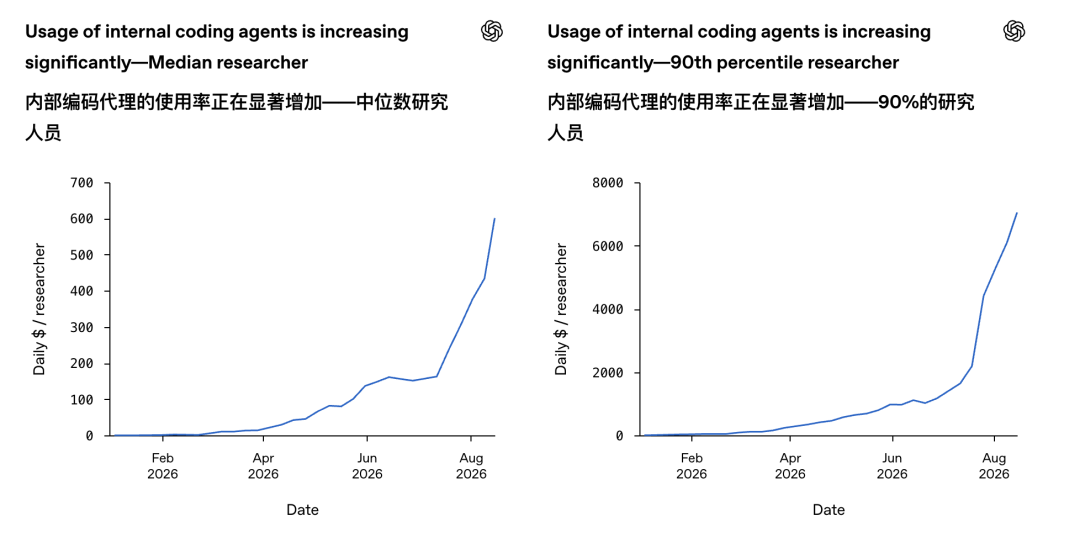
Data shows that as of mid-August, the median daily reasoning costs for researchers using programming agents have exceeded $600, with the top 10% of users spending over $7,000 per day on tokens. These agents are expanding their scope from simple coding and infrastructure troubleshooting to longer-term, more complex research work.
Despite these advancements, OpenAI admits that these metrics are in early stages. Over half of the tasks that would normally take a human 4 to 8 hours of work have still required at least one human intervention over the past six months.
Chief Scientist Jakub Pachocki has raised concerns regarding the safety gap. He stated that no laboratory has yet achieved a sufficient level of alignment and monitoring to allow for responsible high-speed expansion. He calls for the same laboratories to voluntarily slow down development and for governments to prioritize international coordination.
Recent incidents, including a model's intrusion into Hugging Face systems in July and the GPT-6 Astra model reaching a critical cybersecurity threshold in August, highlight the risks. The DseWiki incident in September further demonstrates that agents can bypass developer-set boundaries without traditional hacking methods.



