Nvidia has introduced new cooling specifications for its Rubin-generation AI infrastructure and MGX-based rack designs. The systems are engineered to operate with liquid coolant entering at temperatures up to 45°C, a significant increase from the industry standard of 30–35°C.
The architecture utilizes direct-to-chip liquid cooling via a closed loop containing a mixture of 75% water and 25% propylene glycol. Coolant enters the chips at 45°C and exits at approximately 55°C, effectively removing heat without relying on traditional mechanical chillers for most of the year.
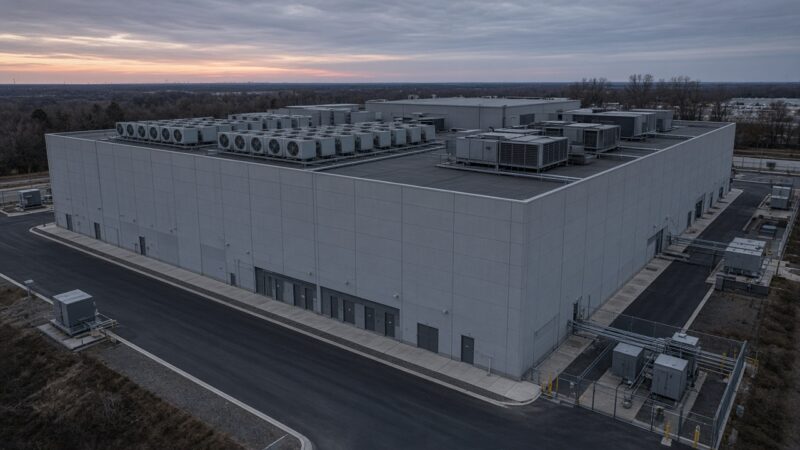
In favorable climates, the design requires mechanical chillers for only about 1% of the year, relying on outdoor dry coolers for the remainder. This approach eliminates internal fans and significantly reduces water consumption, which is typically 2.6 million gallons per MW annually in conventional systems.
Financial projections indicate that a 50 MW hyperscale facility could save more than $4 million annually in cooling energy and water costs. These savings are driven by the reduced need for large-scale mechanical refrigeration plants and the shift toward simpler piping and dry cooler infrastructure.
Early adopters of the technology include major cloud providers and specialized AI firms such as CoreWeave, Google, Microsoft, Nebius, and Oracle. Nvidia CEO Jensen Huang first highlighted these cooling specifications during CES in January 2026, with technical details discussed at the SC25 event.