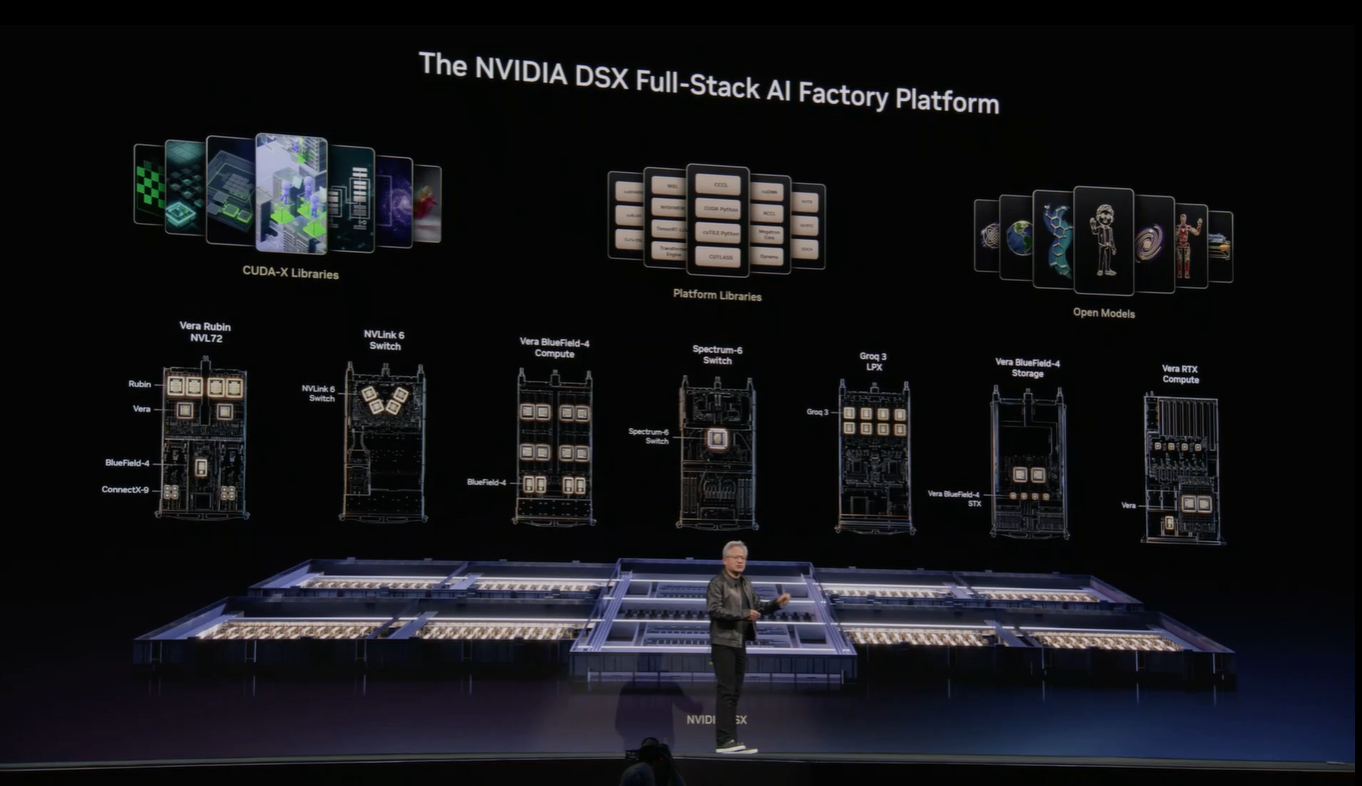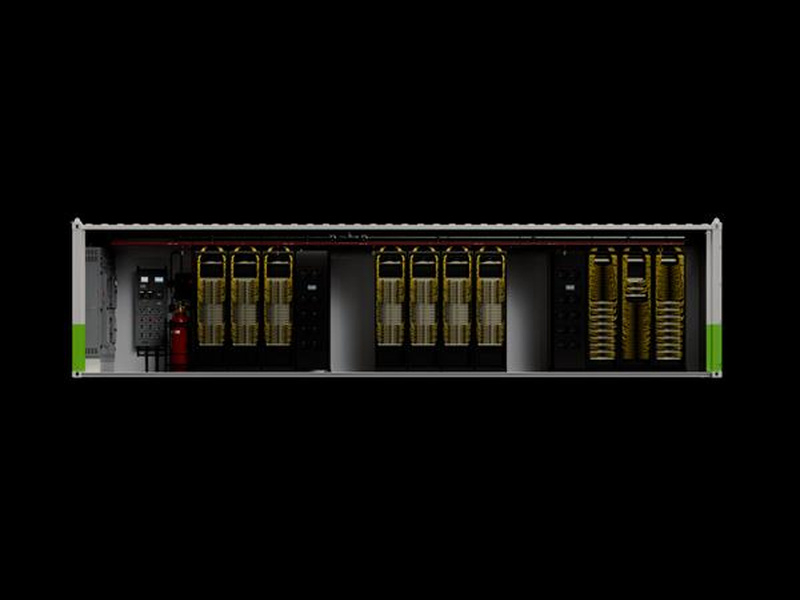
Nvidia CEO Jensen Huang announced a shift in strategy at GTC Berlin, positioning the company as a provider of complete AI operating models rather than just hardware components. The company introduced the DSX POD, a reference design for AI factories delivered in containers. These units contain seven Vera Rubin NVL72 racks with integrated networking and cabling, reducing deployment time from six months to 14 days.
The DSX platform includes specialized features for infrastructure efficiency, such as closed-loop cooling and the DSX MaxLPS power management system, which Nvidia claims can reduce power consumption by up to 30%. Additionally, the new DSX Flex tool is designed to automate grid interactions, allowing data centers to adjust their power load dynamically in response to grid requirements.
Nvidia is also expanding its focus on AI agents with the OpenShell Reference Architecture, which uses BlueField-4 and Nvidia Sentry for hardware-isolated security. The company launched Kumo, a family of structured-data models intended to help agents process information from ERP and financial systems. These tools aim to move agents beyond simple chat interfaces into operational roles.
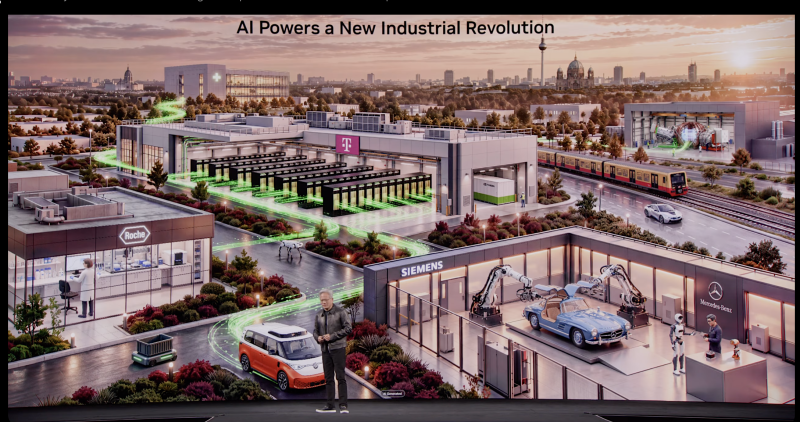
The company reported that physical AI revenue reached nearly $11 billion in the first half of 2026, marking a 30% increase compared to the previous year. Nvidia is targeting the telecommunications sector, predicting that telco infrastructure will evolve into distributed AI networks. The company is collaborating with partners like Nokia to integrate AI workloads into existing telecom facilities.