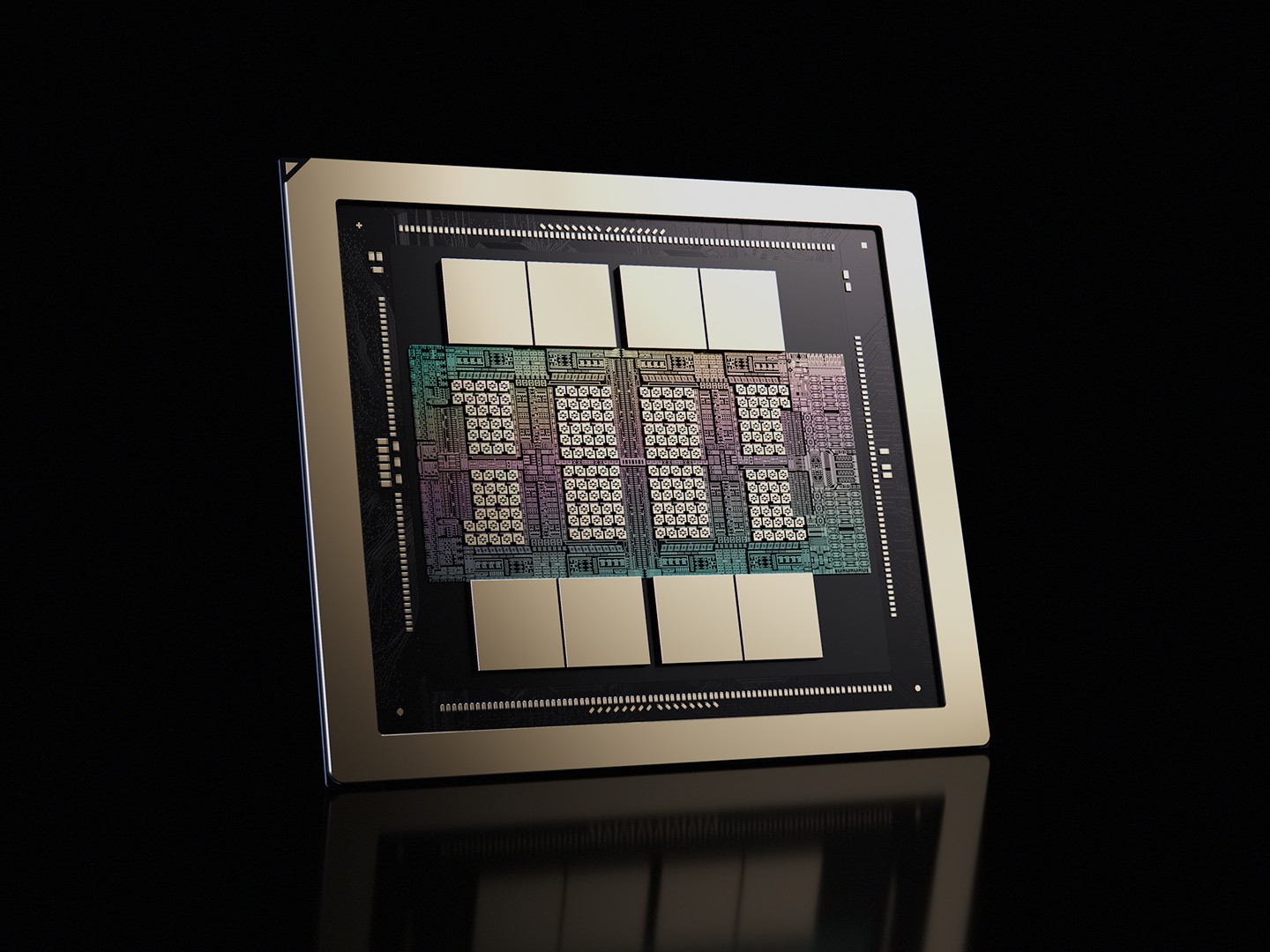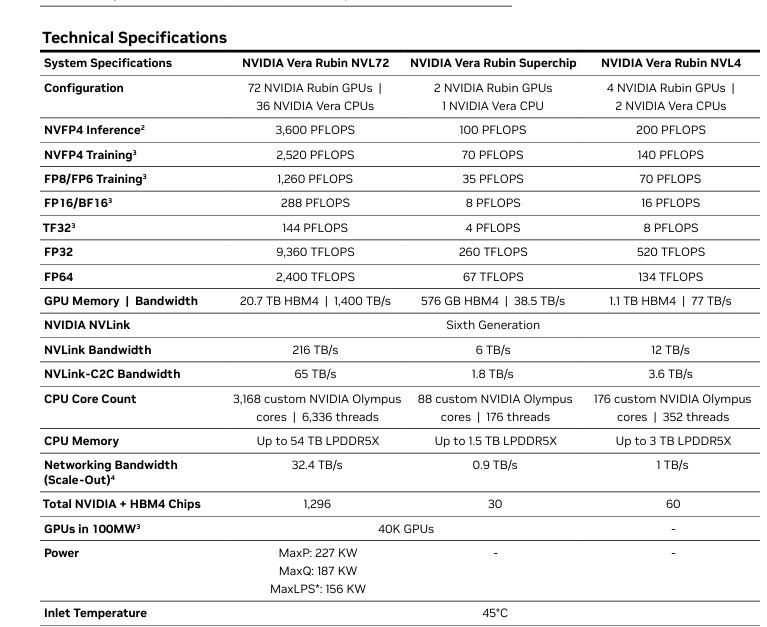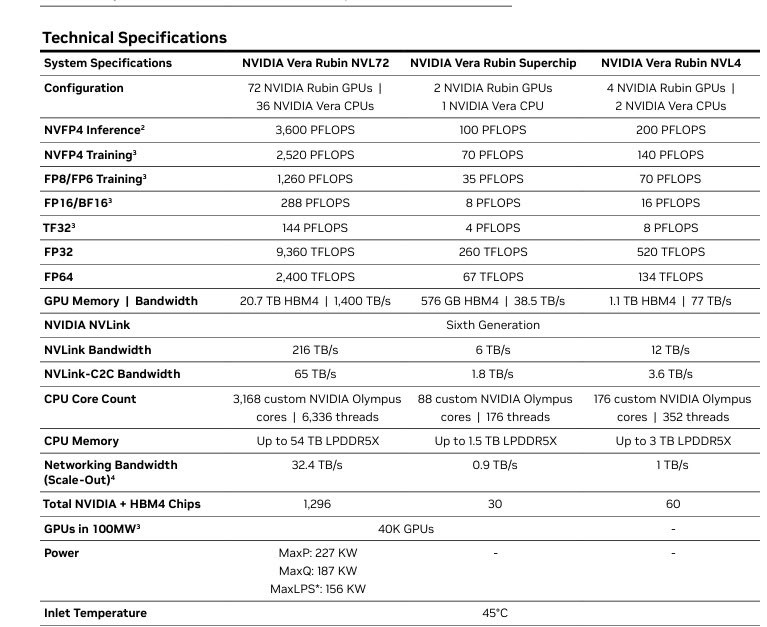
Nvidia has updated the hardware specifications for its upcoming Vera Rubin AI platform. The company lowered the HBM4 memory bandwidth from a previous target of 22 TB/s to 19.2 TB/s, representing a reduction of approximately 12.7%. The Rubin GPU will feature 288 GB of HBM4 memory.
The NVLink interconnect bandwidth for the Vera Rubin superchip has also been adjusted, decreasing from 7.2 TB/s to 6 TB/s, a reduction of about 16.7%. These changes may allow Nvidia to balance chip performance with supply chain capabilities and production yields for the new HBM4 technology.
Conversely, Nvidia has increased the scale-out network bandwidth for the Vera Rubin superchip from 0.8 TB/s to 0.9 TB/s. This adjustment aims to improve data transmission between computing nodes, which is critical for large-scale AI clusters that organize numerous GPUs into unified systems.
The Vera Rubin NVL72 rack configuration remains designed to house 72 Rubin GPUs, utilizing sixth-generation NVLink technology. Nvidia's strategy appears to involve reallocating performance budgets across the system architecture to optimize for large-scale training and inference tasks.
While these specification changes may ease technical requirements for HBM4 suppliers, the ultimate impact on system performance depends on software optimization and actual workload demands. Nvidia has not confirmed that these adjustments are a direct response to memory shortages.