

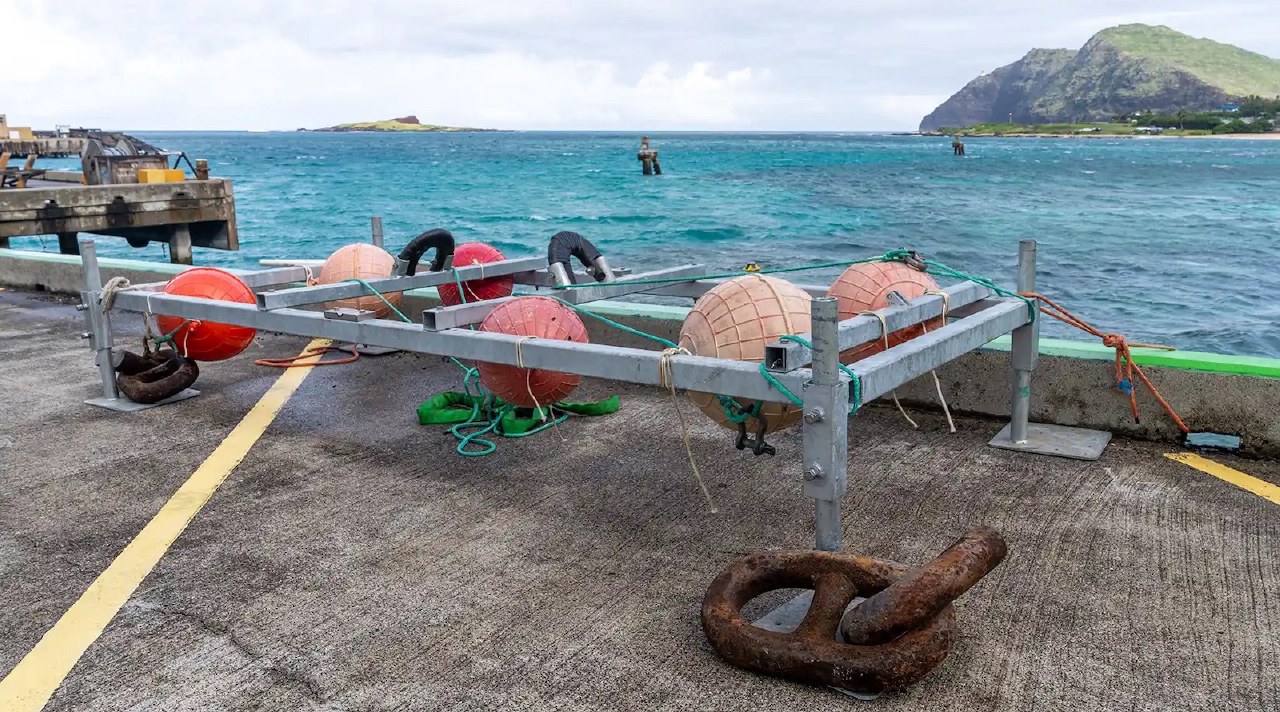
The Small Underwater Research Flap Wave Energy Converter (SURF-WEC) is a new device designed to convert ocean wave motion into electricity. Developed by the National Laboratory of the Rockies (NLR) and the University of Hawaii at Manoa, the system features a buoyant flap that oscillates with waves to drive a hydraulic pump and generator.
The project aims to address a lack of accessible data in the marine energy industry. Researchers are providing open access to the device's design, performance data, and operational lessons. The system is currently deployed near the Makai Research Pier in Oahu, Hawaii, where it has been operating for over five months.
The SURF-WEC is unique for its ability to switch remotely between active and passive energy harvesting modes. This allows researchers to test efficiency under different conditions. The system is managed by the custom MODAQ 2.0 platform, which enables real-time monitoring and control from remote locations.
Development involved two years of laboratory testing and modeling, including the use of WEC-Sim software. The team plans to keep the device in the water for up to a year to gather comprehensive data. The project is funded by the U.S. Department of Energy’s Hydropower and Hydrokinetic Office.



