

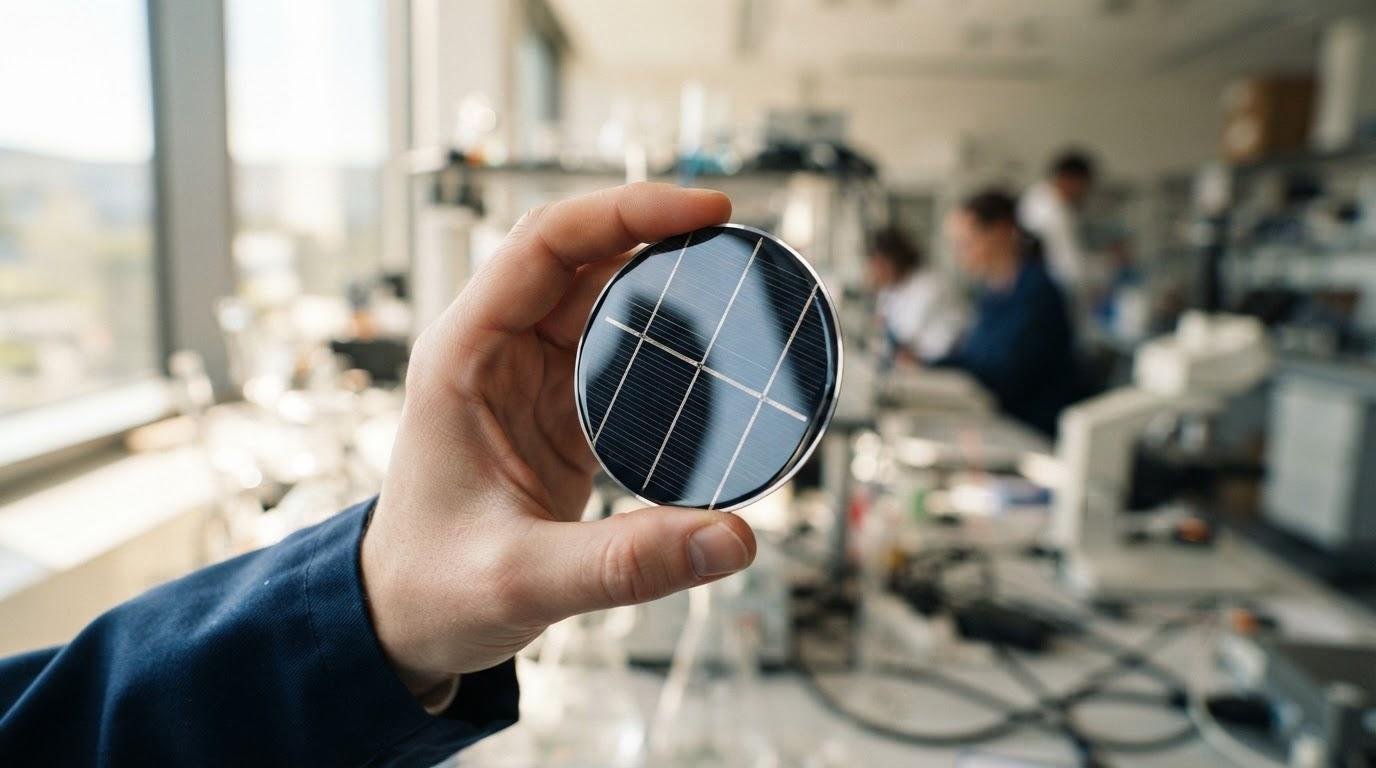
Researchers at the Institute of Photonic Sciences in Barcelona have developed a method to reduce energy losses in solar cells by controlling the direction of photon emission. By limiting the angles at which photons escape the cell, the team aims to improve the theoretical efficiency limit of single-junction solar cells.
The current theoretical limit, known as the Shockley-Queisser limit, stands at 33.16 percent. Calculations suggest that the new approach could potentially raise this efficiency threshold to approximately 43 percent. The researchers tested this concept using an organic solar cell modified with silver electrodes and additional layers.
These structural components reflect photons attempting to escape at wide angles, forcing them into a narrower emission range while still allowing sunlight to enter. The experiment successfully demonstrated a reduction in energy losses without requiring significant manufacturing complexity.
While a 43 percent efficiency cell has not yet been produced, the study validates the underlying principle. The team believes this technology could be adapted for various photovoltaic applications to increase power generation from the same surface area.

