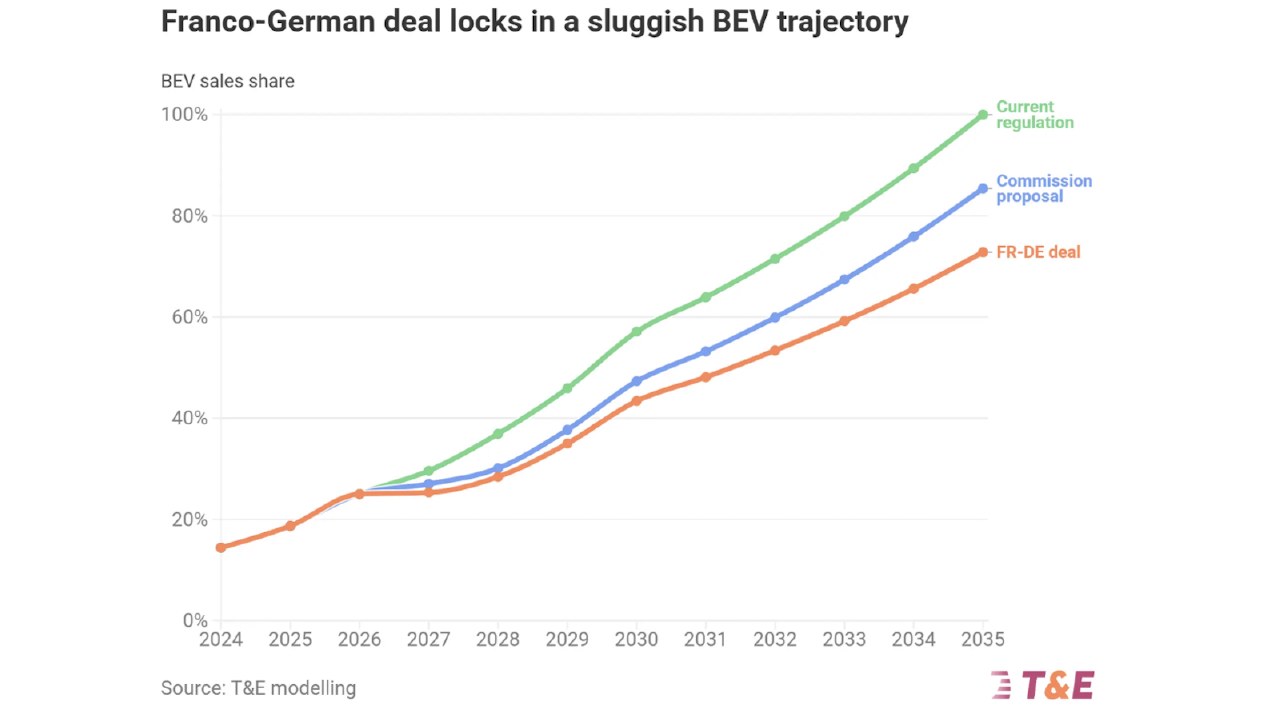
The agreement between France and Germany to relax EU car CO2 standards and IAA requirements has been criticized by Transport & Environment (T&E) as a significant strategic error. The deal allows vehicles assembled in the EU using Chinese-made batteries to carry a Made-in-EU label, which T&E warns will undermine the European battery supply chain.
Projections from T&E indicate that the proposed changes will reduce the supply of electric vehicles from the current target of 57% to 43% by 2030. Furthermore, the deal sets low requirements for local battery cell sourcing, mandating only 10% in 2028–2029 and 20% in 2030–2031, despite over 50% of cells used in EU-sold EVs being produced domestically in 2025.
The organization highlights that these thresholds threaten the demand for European gigafactories, putting 164 GWh of capacity at risk in 2027 and 254 GWh by 2030. T&E argues that these measures will hinder the competitiveness of European automakers against Chinese rivals and limit the availability of affordable electric vehicle models for consumers.
T&E is urging members of the European Parliament and EU governments to reject the weakening of CO2 standards. The organization advocates for stricter Made-in-Europe requirements and higher electrification targets for corporate fleets to ensure sustained demand for European battery production starting in 2027.