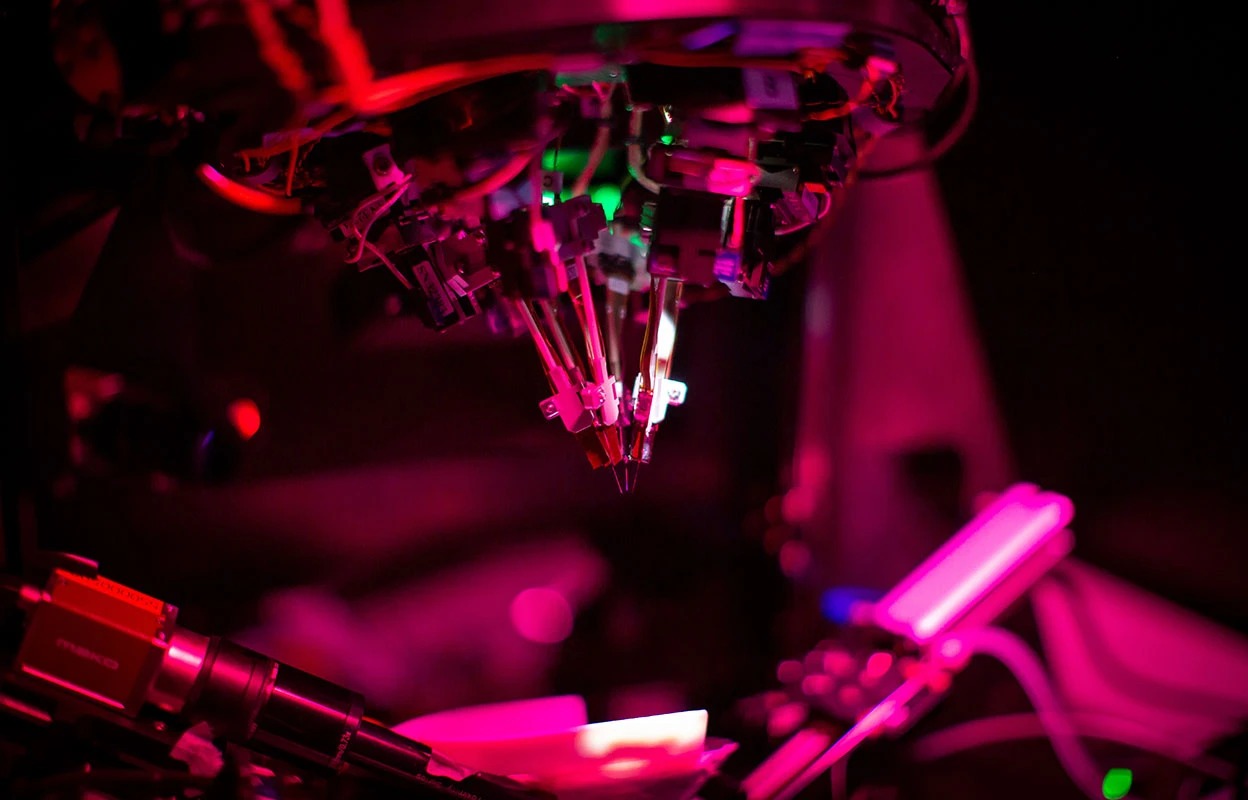
Neuropixels, a silicon-based neural probe, has transitioned from animal testing to human brain research. According to a report in Nature, surgeons at the National Hospital for Neurology and Neurosurgery in London successfully used the probe to monitor neural activity in a patient during a shunt procedure.
The probe, which is approximately 1 centimeter long and thinner than a human hair, allows researchers to record the activity of individual neurons in real time. During the experiment, the patient was exposed to repeated auditory stimuli, such as specific words, to observe how the brain processes language and frequency.
Developed in 2017 by the Howard Hughes Medical Institute and Imec, the technology has evolved through multiple iterations. The first generation featured 960 recording sites, while the Neuropixels 2.0, released in 2021, increased this to 5,120 sites, enabling more precise data collection across multiple brain regions.
The technology is currently utilized in approximately 1,700 laboratories worldwide, covering over 20 animal species. Researchers have used it to map neural activity in mice and primates, with one 2025 study by the International Brain Laboratory involving 139 mice and 699 probes to track over 75,000 individual neurons.
Experts emphasize that Neuropixels is a tool for fundamental neuroscience research rather than a clinical treatment device or a mature brain-computer interface. It serves to help scientists understand brain information processing mechanisms, potentially laying the groundwork for future medical applications.