

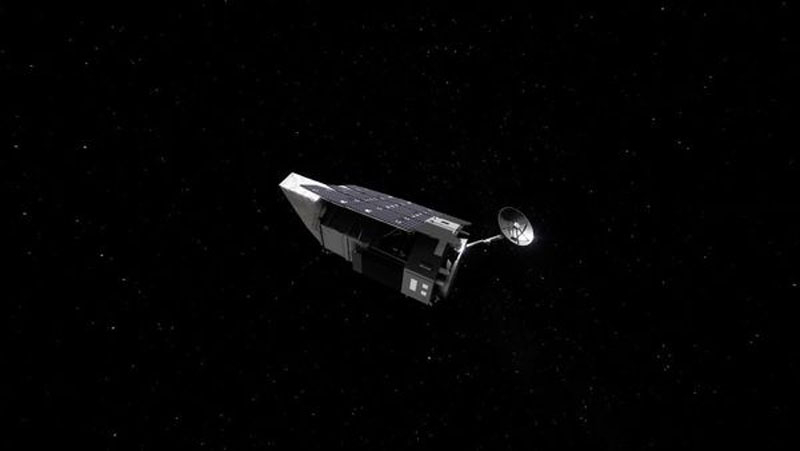
NASA engineers have successfully calibrated the Nancy Grace Roman Space Telescope, achieving optical performance that exceeds original design specifications by 30%. The observatory, which launched on August 30, 2026, is currently en route to the L2 Lagrange point.
The core of the calibration involved the Wide Field Instrument (WFI), an infrared camera featuring an 18-detector array with a total resolution of approximately 300 megapixels. Technicians adjusted the secondary mirror by a distance equivalent to one-sixteenth the width of a human hair.
These adjustments reduced the optical error from the projected 90 nm RMS to 63 nm RMS. The calibration process also included testing the filter wheel mechanism, LED-based calibration systems, and thermal control units to ensure precise spectral analysis.
In addition to the WFI, the team is currently focusing the Coronagraph Instrument, which is designed to suppress starlight for direct exoplanet observation. This process involves the ongoing calibration of deformable mirrors within the optical system.
The telescope has been in space for one and a half months and transmitted its first technical image one month ago. While the hardware performance is exceeding expectations, scientific operations are not expected to commence until January 2027.


