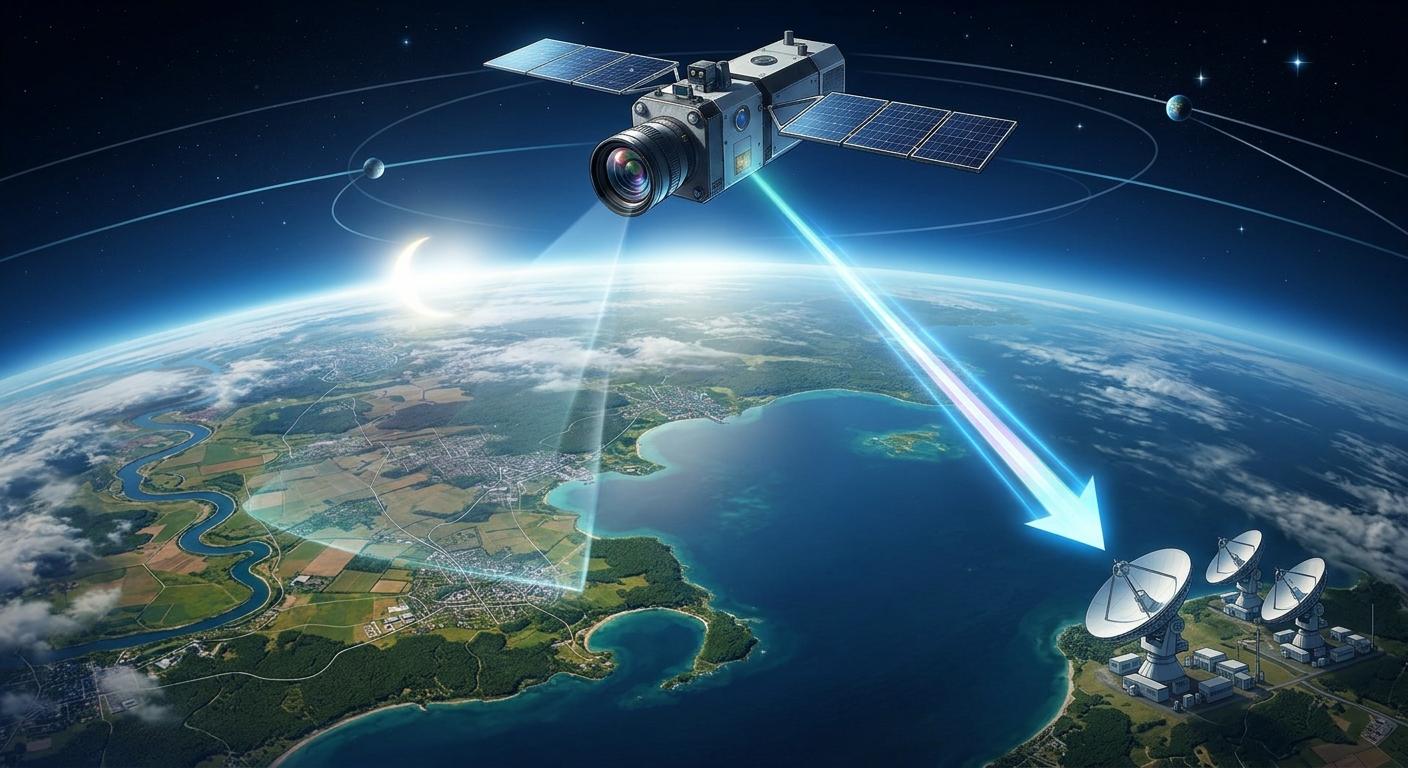
MTS, in partnership with the state operator Russian Satellite Communications Company, has successfully tested direct smartphone-to-satellite communication. The test utilized NTN-D2C technology to transmit SMS and data from a smartphone to the Express-AM8 satellite, located at an altitude of over 36,000 km.
The signal was relayed from the satellite to a ground teleport and then connected to an MTS base station. While the technology is intended for emergency messaging and small data transfers in remote areas, there is currently no established commercial timeline for the service in Russia.
The global market for direct-to-cell satellite services reached $407 million in 2025, with North America accounting for over half of that volume. SpaceX currently leads the sector, while Amazon plans to enable similar connectivity for unmodified smartphones by 2028.
Russia's satellite infrastructure includes 18 geostationary satellites and 30 low-Earth orbit satellites operated by Bureau 1440. Over 70% of the country lacks terrestrial cellular coverage, prompting other operators like T2, Beeline, and MegaFon to explore similar satellite integration projects.
Experts note that existing geostationary satellites were not designed for this specific use case, potentially requiring new subscriber hardware. Furthermore, the Ministry of Digital Development emphasizes that a regulatory framework for radio frequency spectrum allocation is necessary before commercial launch.