

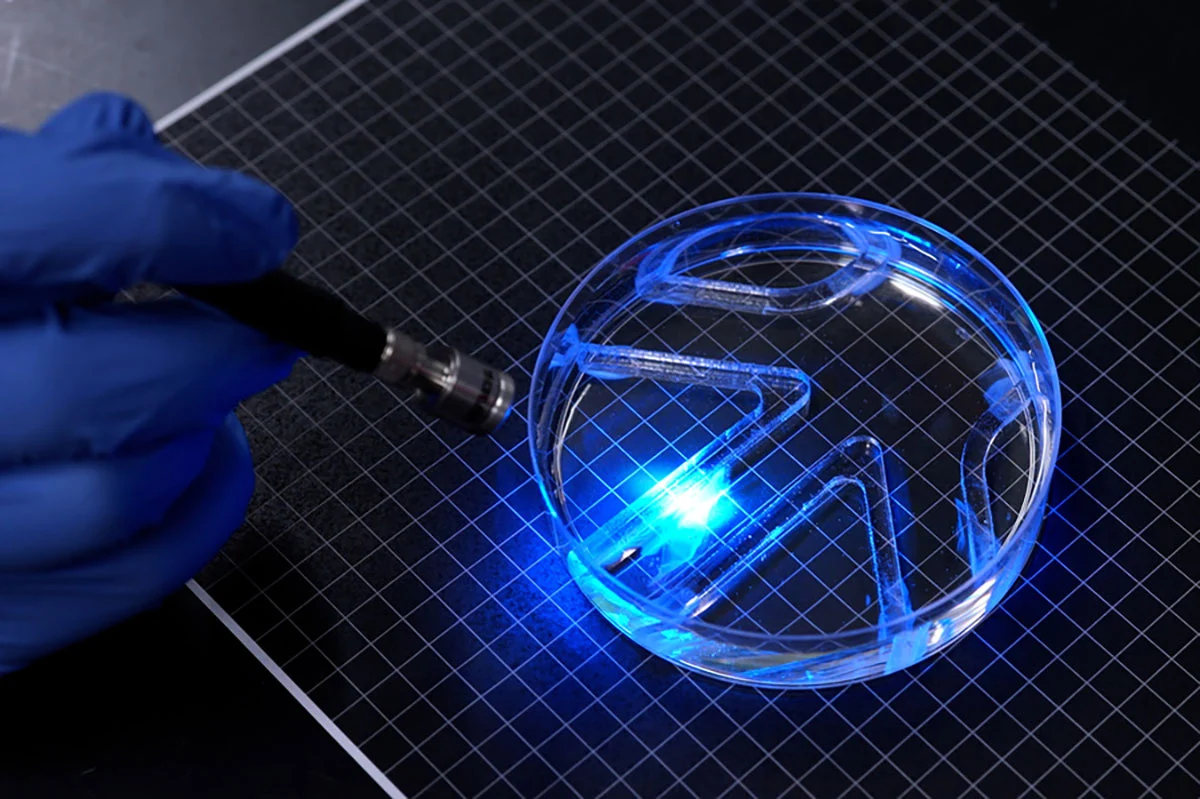
MIT engineers have developed a thin underwater robot powered by living skeletal muscle cells. The device features two independently controlled gel fins, each measuring 15 millimeters in length, 7 millimeters in width, and 0.5 millimeters in thickness. The surface is coated with a muscle cell layer less than 15 micrometers thick, modified to respond to blue light at a wavelength of 470 nanometers.
The team utilized a GelMA (methacrylated gelatin) scaffold with imprinted grooves to align muscle cells. This material offers superior durability compared to previous fibrin gels, preventing shrinkage during contraction. Research indicates that square-bottomed grooves improve cell alignment and force generation. The robot's movement is controlled by external light, achieving speeds of four body lengths per minute and rotation speeds of 1200 degrees per minute.
Performance tests showed that the optimized two-dimensional muscle film generates 20 times the contractile force per unit volume compared to three-dimensional tissues. Furthermore, the functional lifespan of the actuator increased from under 10 minutes to over 30 days. Training the muscle tissue with light stimulation resulted in a fourfold increase in displacement compared to untrained control groups.
Currently, the robot lacks onboard sensors or autonomous decision-making capabilities, relying entirely on external light guidance. While the design aims to overcome the bulkiness of traditional biohybrid robots, future development will focus on integrating micro-light sources and portable power supplies. Potential applications include environmental monitoring and exploring fragile aquatic ecosystems.



