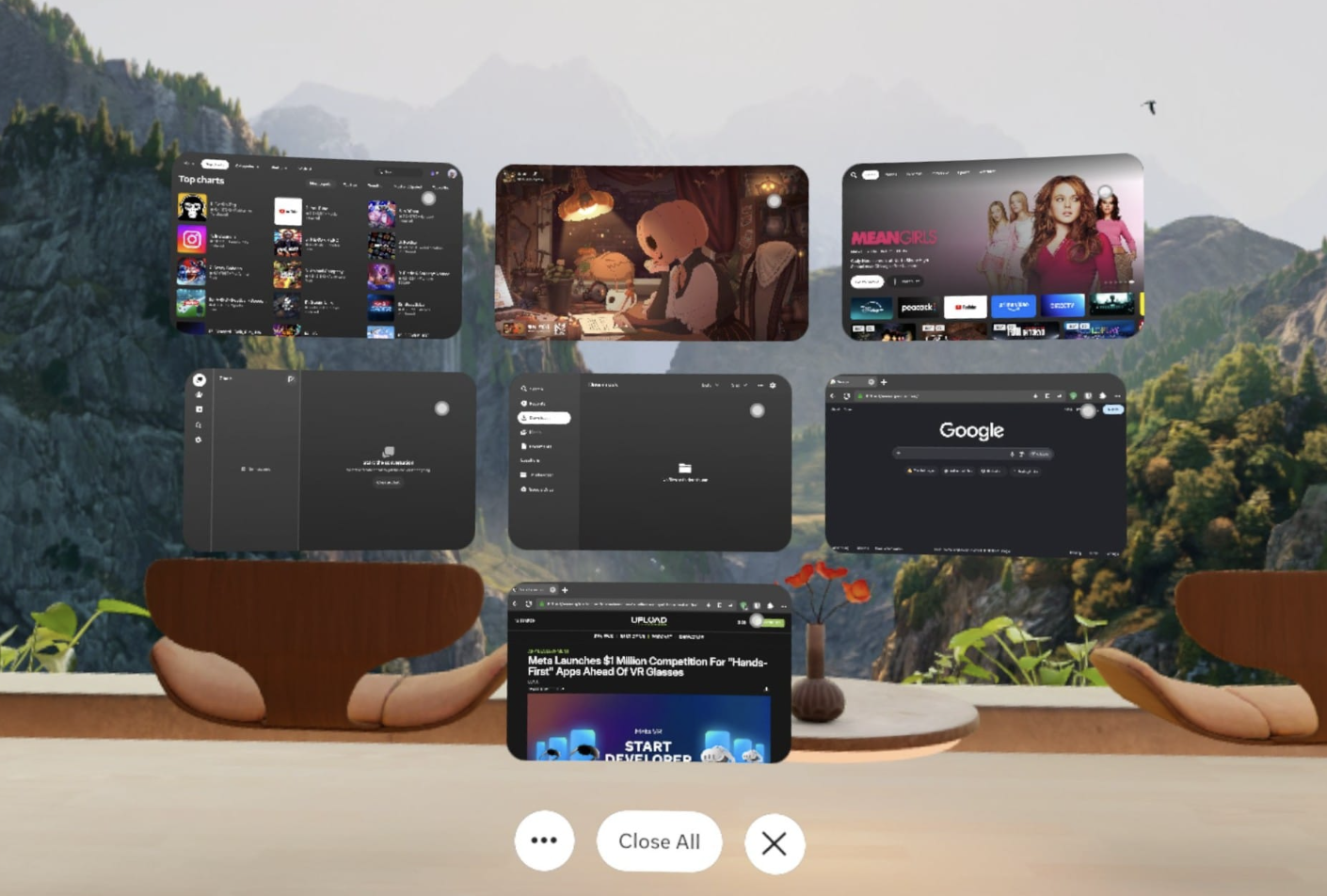
Meta has initiated the rollout of the Horizon OS 2.9 public test channel update for Quest headsets. The update introduces a new multitasking interface codenamed Display Evo, which allows users to arrange application windows in their surrounding space. Users can group windows by proximity or stack them in a card-like layout for easier navigation.
The update restores two classic virtual environments: Desert Terrace, originally from the Quest 2 era, and the Space Station environment released in April 2020. Users can access these via the home editor menu using the left Touch controller. Additionally, Quest 3 and Quest 3S devices now feature a system-level QR code scanner accessible through the camera app or quick settings.
Meta has refined the virtual keyboard and trackpad interface, enabling usage in both fully virtual and passthrough modes. The room scanning mechanism now supports resuming interrupted scans, allowing users to continue from previously mapped areas. Furthermore, a new troubleshooting flow for Touch controllers has been added to the device settings menu.
The global search function in the Navigator desktop now supports offline adjustments for settings like Wi-Fi, Bluetooth, and Do Not Disturb mode. For gamepad users, a new toggle allows disabling hand tracking to prevent accidental input switching. These features are currently in the public testing phase, with final availability subject to Meta's official release schedule.