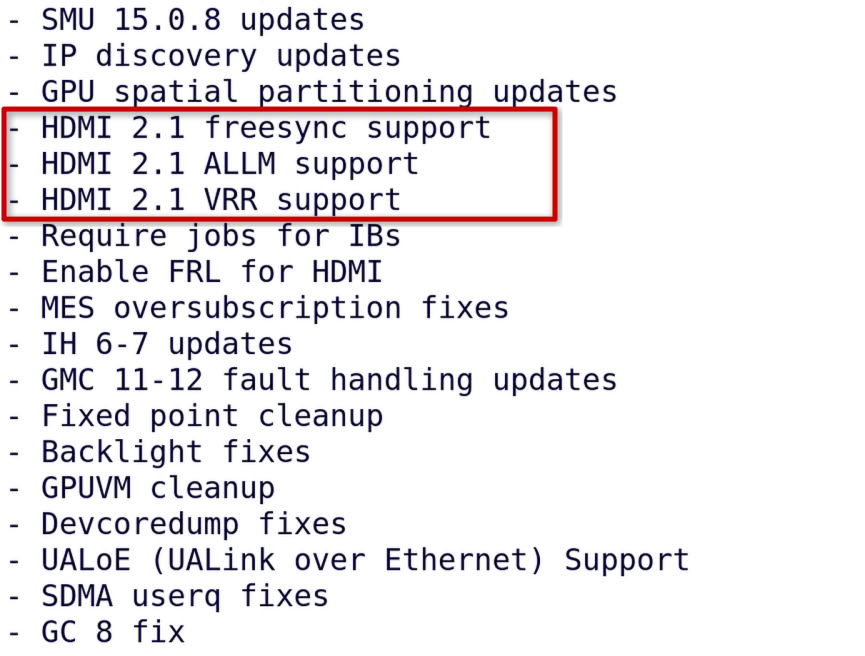
The upcoming Linux Kernel 7.4 introduces significant updates to display and graphics driver architectures. The new kernel adds native support for AMD FreeSync variable refresh rate (VRR) and the Auto Low Latency Mode (ALLM) via HDMI interfaces, addressing long-standing limitations for Linux users connecting to modern displays.
Previously, Linux graphics drivers faced challenges with HDMI 2.1 features due to strict licensing restrictions from the HDMI Forum. The AMD open-source GPU driver team and kernel maintainers have now refactored the Direct Rendering Manager (DRM) and AMD GPU display core (DC) code to enable these features directly through the standard HDMI interface.
The integration of FreeSync VRR allows the system to synchronize the display refresh rate with the GPU frame rate, eliminating screen tearing and stuttering. This brings the Linux gaming experience closer to the performance levels typically seen in Windows environments when using compatible HDMI display hardware.
The Auto Low Latency Mode (ALLM) feature automatically detects 3D games or low-latency tasks and signals the connected TV or monitor to switch to a dedicated game mode. This process disables image post-processing filters and motion interpolation, which typically cause input lag, and restores normal settings when the user exits the game.
These updates are currently part of the mainline merge window. Once the kernel version is finalized, the features will be pushed to major Linux distributions, marking a significant improvement for HTPC users and the broader open-source gaming ecosystem.